My Top Spots Along the Stuart Highway: A Road Trip through the Middle of Australia
Driving the Stuart Highway is a road trip like no other. Spanning roughly 2,720 kilometers through the middle of the Australian outback (around 32 hours of drive-time) this route connects Adelaide in the South to Darwin in the North. The Stuart Highway follows a track first travelled by Aboriginal peoples for tens of thousands of years and later traced by Scottish explorer John McDouall Stuart in 1862. Once a rough telegraph track, it was transformed during WWII into the major north–south highway that it is today. Today, it’s a lifeline for locals, road-trippers, and caravaners alike, with just enough fuel stops and cell-service blackouts to keep you on your toes. Expect long, empty stretches of road broken by quirky roadhouses, tiny towns, and some of the country’s most impressive natural landmarks.
What to expect from the get-go:
Flies, flies, endless flies that will love you like you’ve never been loved before.
Anxiety about where the next petrol station is (a 20L jerry can full of extra fuel is essential).
Endless free bush camping that’s equal parts remote, sketchy, peaceful, and “is that a noise or my imagination?”
All your experience avoiding banana peels playing Mario Kart finally comes in handy as you dodge dead kangaroos on the road.
Your Google Maps directions swinging wildly between “no service” and “turn left in 487 km.”
Being swallowed whole by 50-meter-long road trains as they thunder past and shake your entire soul.
Scenery that doesn’t stray too far from red dirt, blue sky, and the occasional bush.
Inescapable wet heat that leaves you dripping in ways you didn’t know were possible.
The most stunning night stars you’ve ever seen in your life that remind you that it’s all worth it.
If you have the opportunity to complete this road trip, take your time, follow the detours (but don’t get lost in the desert), and let the highway surprise you. Below are all my favorite stops that you can’t miss (in order of South to North).
1. Coober Pedy
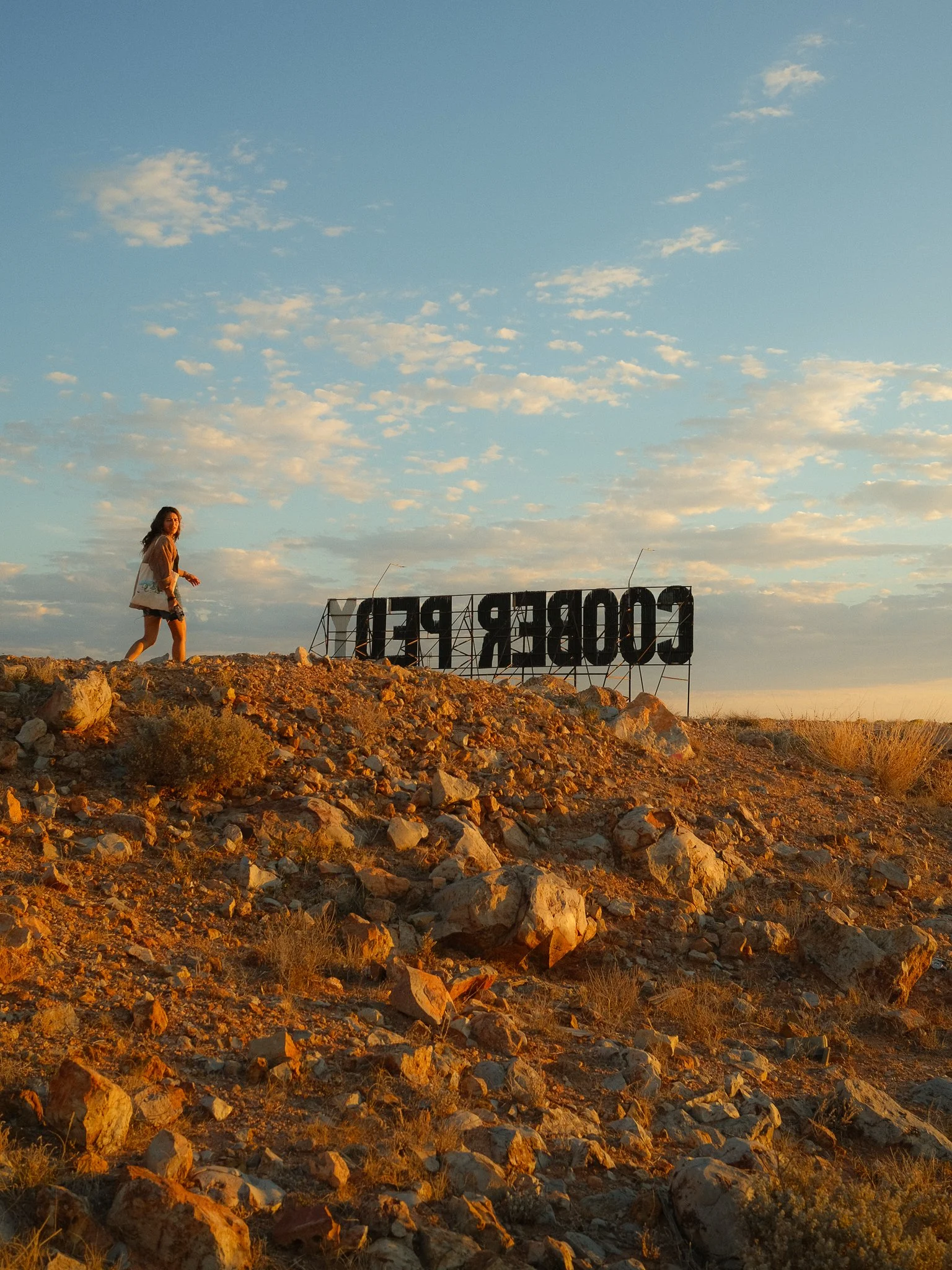
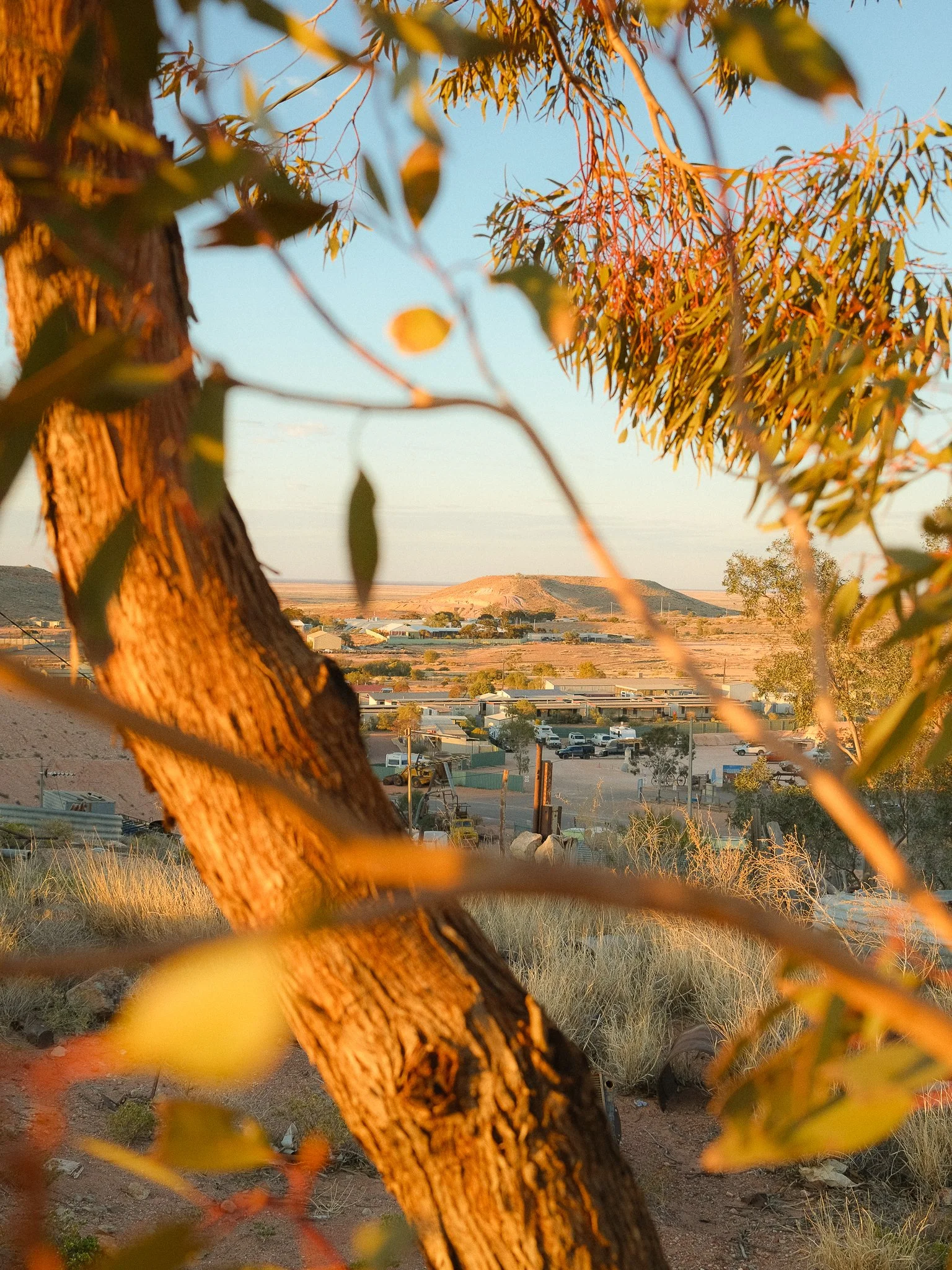
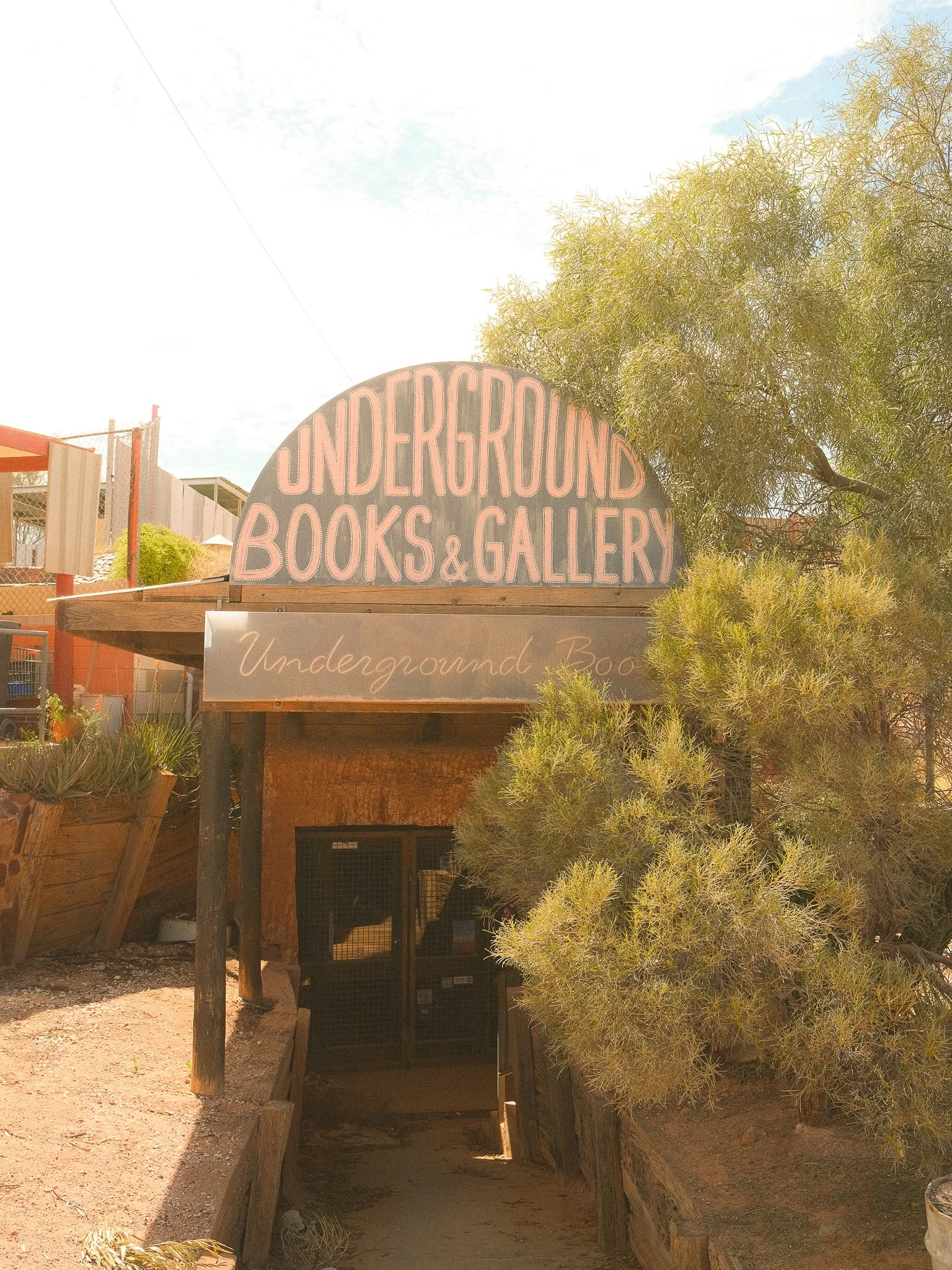
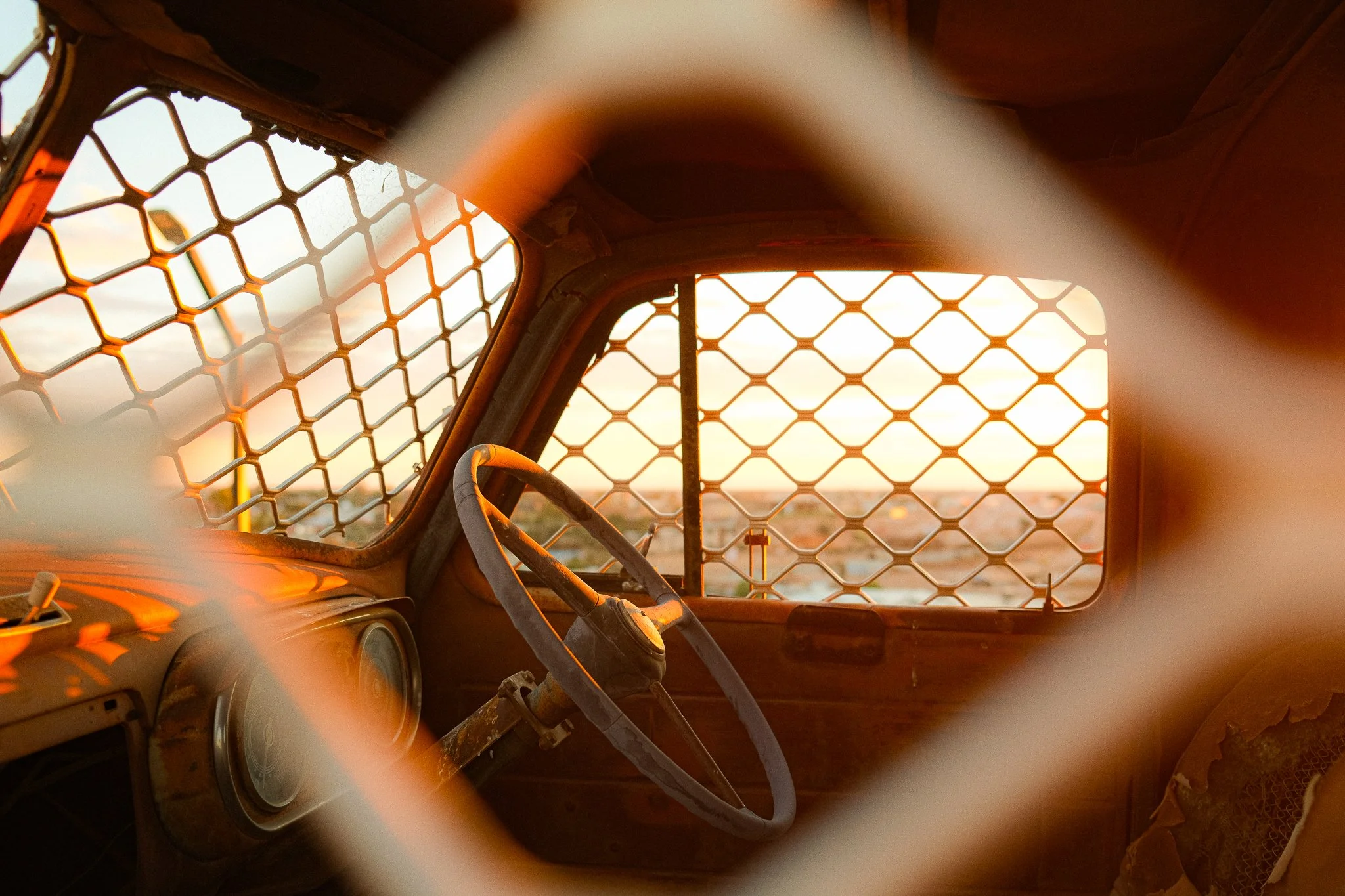
The moment you roll up to Coober Pedy feels like you’ve just landed on Mars. The landscape is flat, red, and dotted with mounds of mine tailings, and the whole place has this “where even am I?” energy. What makes it even stranger (and cooler) is how much of the town exists underground. Locals literally live in dugouts carved into the earth to escape the brutal desert heat. These underground homes, churches, and cafes are dark, quiet, and way more comfortable than anything on the surface.
If you happen to be in the market for opal, you’re in luck, because Coober Pedy is the opal capital of Australia. Since the first opal was found in 1915, the whole town grew around mining and waves of people from all over the world came chasing opal and carving out tunnels, homes, and entire lives underground.
Big Winch 360 is an incredible spot for sunset views, and with a lookout park right next door, it’s the perfect place to have a cold brew while watching the colors change. The Old Timers Mine is another fun stop as an interactive museum that gives you a peek into Coober Pedy’s opal mining history, with the added bonus of wandering through an actual underground home. You can then pop into a few opal shops around town and maybe treat yourself to a little opal treasure. And for an easy walk with a payoff, head up to the Coober Pedy sign, surrounded by heaps of old cars and quirky metal scraps, with great panoramic views over the town.
I’m not gonna lie… this town is quirky and absolutely no-frills. It’s a hot dustbowl (hence everyone choosing to live underground), scattered with old cars, metal scraps, and random spaceship looking things. We stayed at the free camp right in town, which was solid overall, aside from the layer of dust that managed to sneak into every corner of my van. Don’t miss your chance to dine, stay, or shop underground and witness the delightfully weird energy of Coober Pedy.
2. Uluru & Kata Tjuta National Park
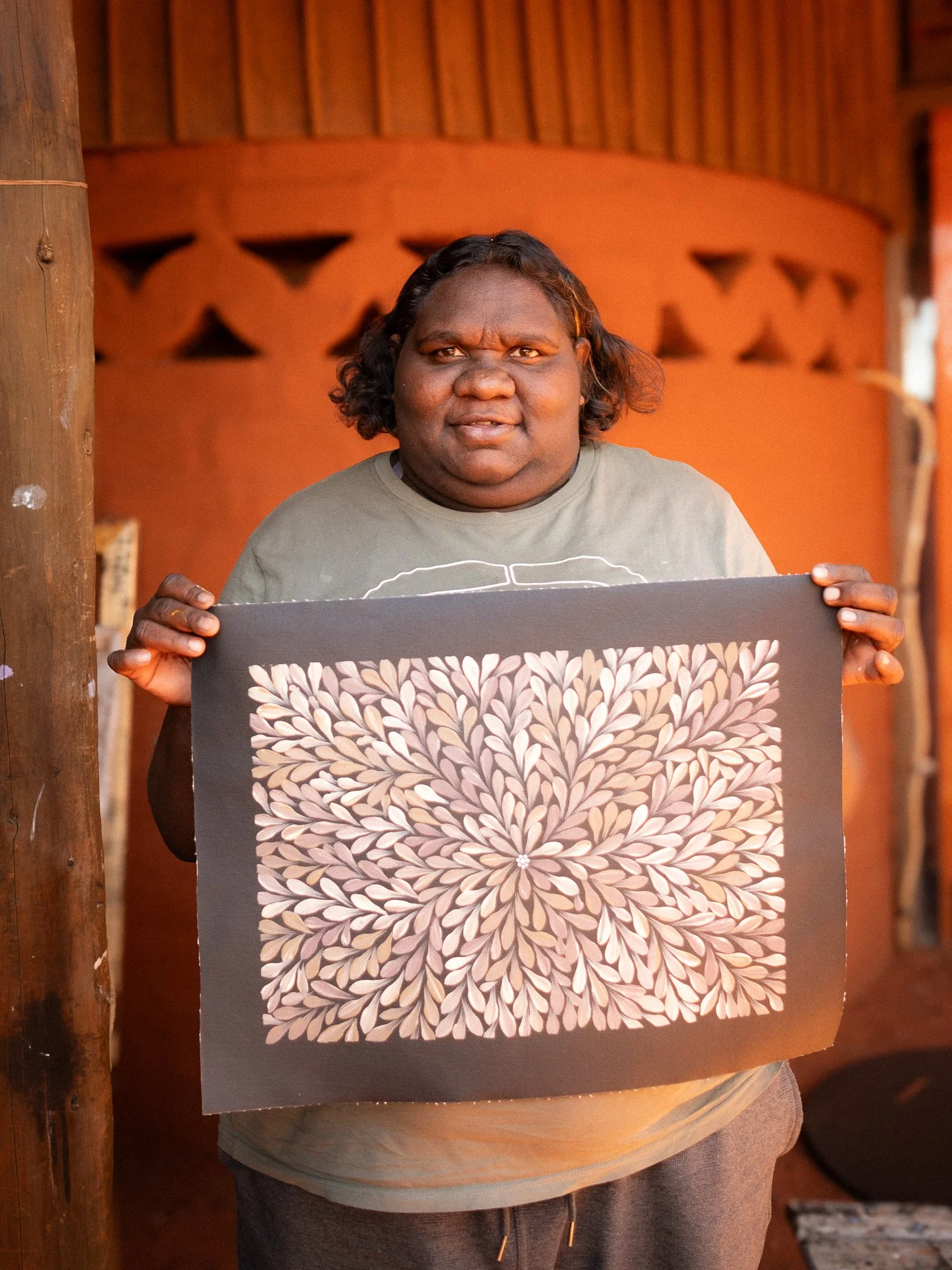
Local artist Olivia Moneymoon with her painting of Irmangka Irmangka, a bush medicine whose tiny leaves have carried Anangu healing for generations. Her work is culture, memory, and medicine on canvas. I was lucky to have had the chance to take this piece of art home with me.
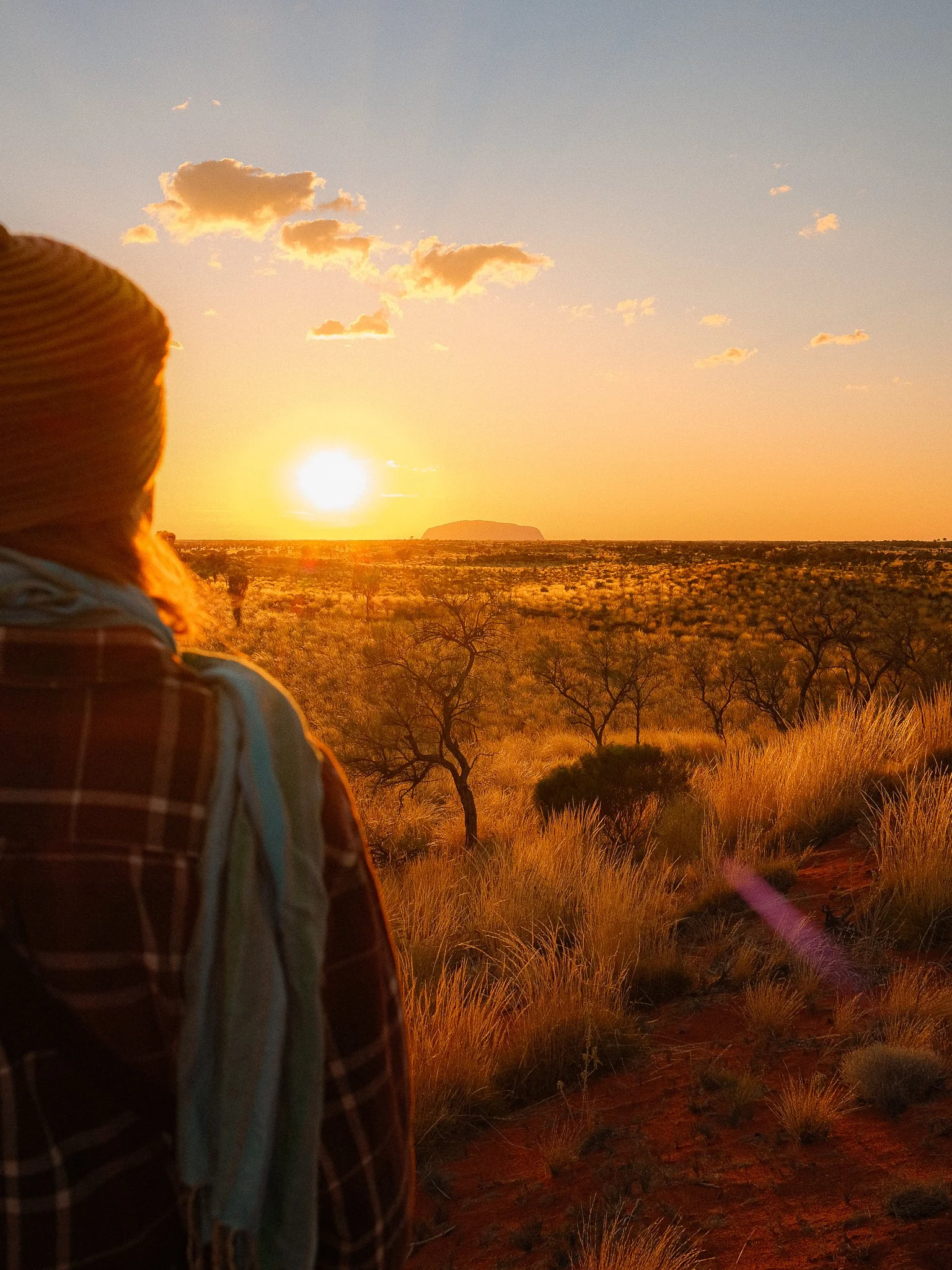
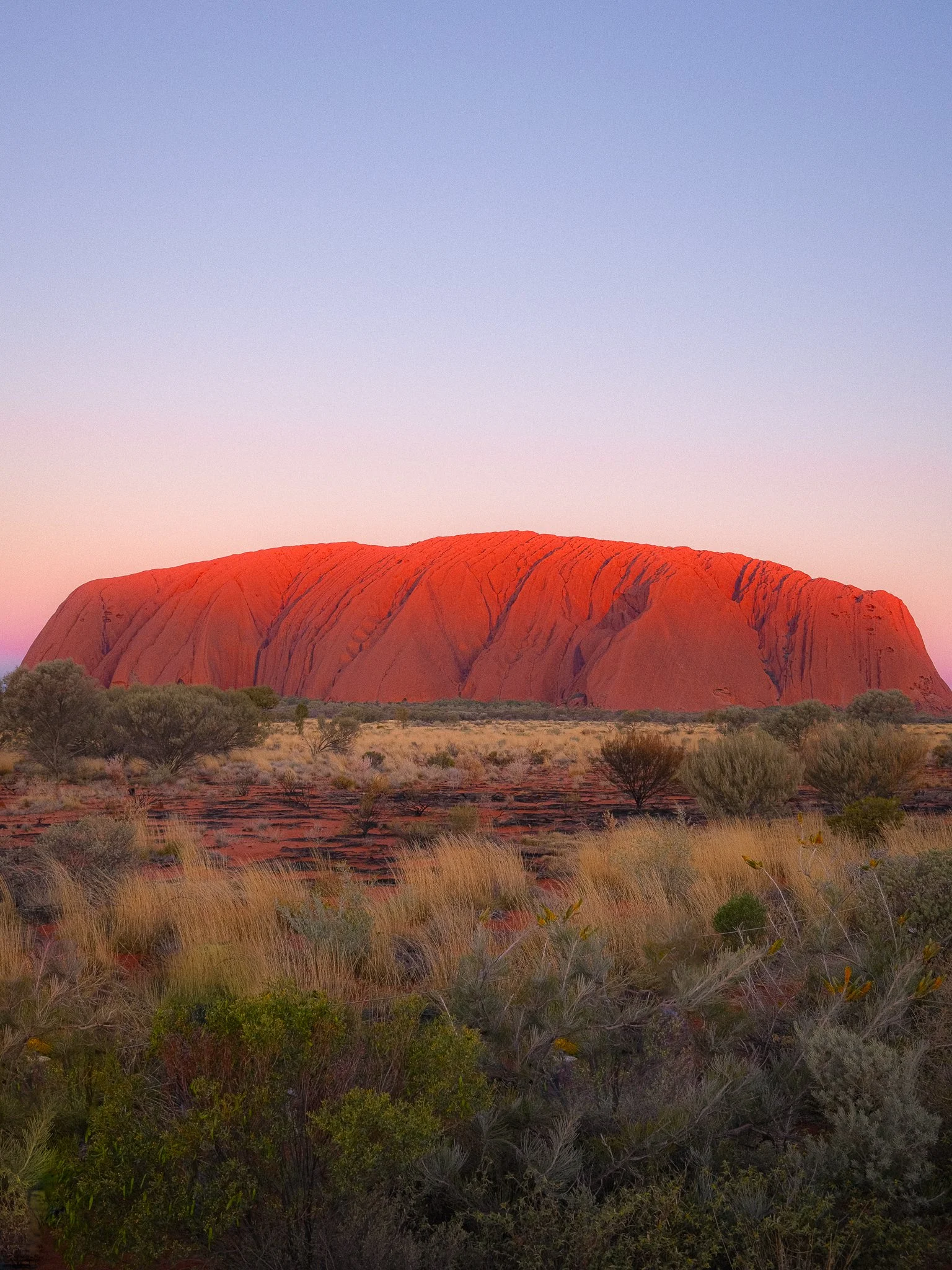
Uluru is the physical beating heart of Australia. You don’t just see it, you feel its presence. There’s a gravity to it that’s hard to explain until you’re standing there, realizing how much bigger it is in real life than in the photos.
Uluru Kata Tjuta National Park is a place made for sunrises and sunsets. That’s when all the magic happens. It’s kind of a traveling Australia rite-of-passage to watch an Uluru sunset. You can’t miss watching the rock shift from soft orange to glowing fiery red to deep purple as the sun drops behind the desert. And at sunrise, when the first light hits, the textures of the rock come alive. Every groove, ripple, and shadow becomes sharper. It feels like the landscape is waking up with you.
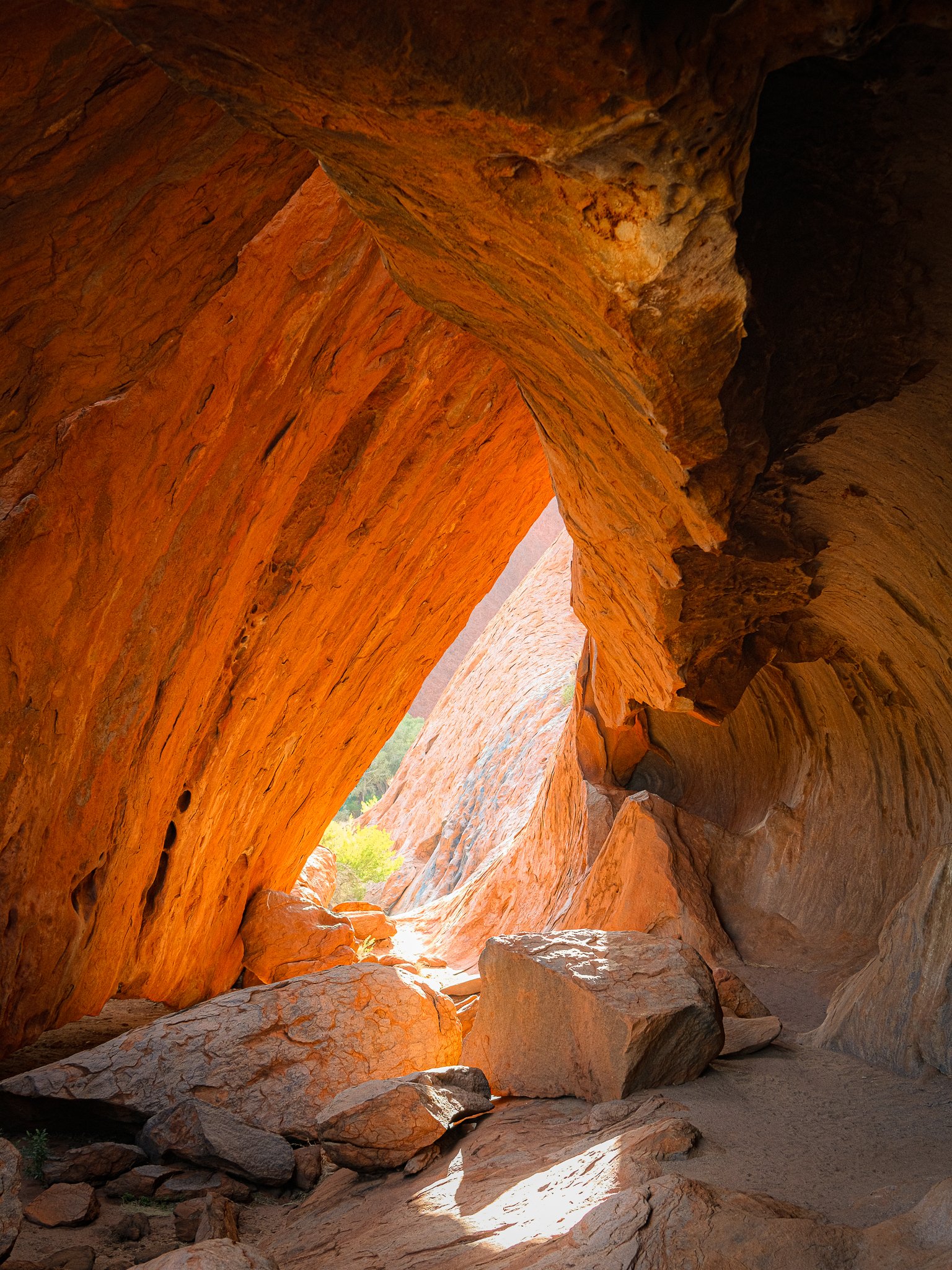
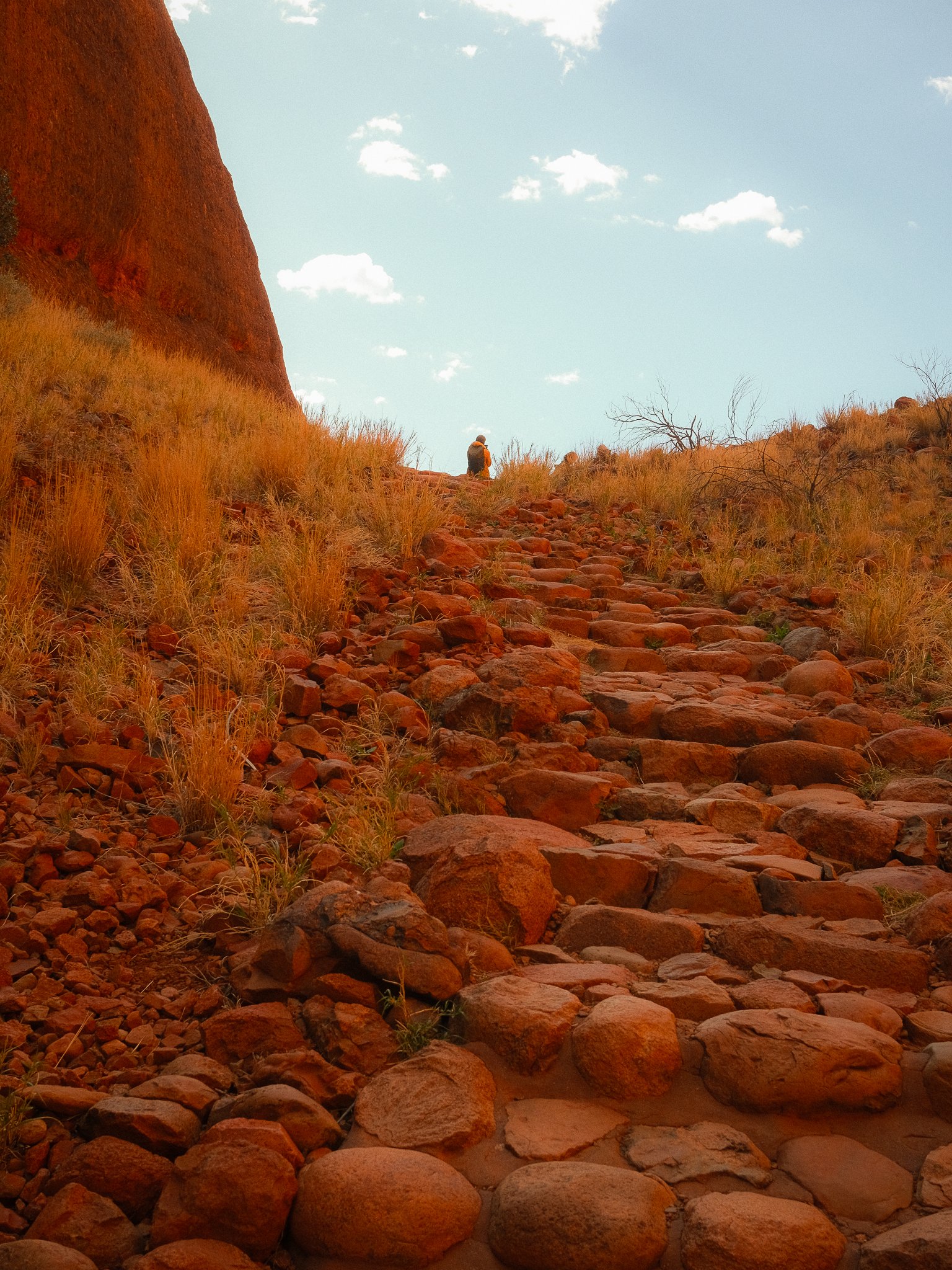
Climbing Uluru has been banned since 2019 out of respect for Anangu culture, but you can experience and respect the rock in the most intimate way: walking the Uluru Base Walk. It’s a full circumnavigation around the rock, and every section feels different as you come across new colors, new shapes, and new stories written into the stone.
Then there’s Kata Tjuta, which is a completely different energy, and the other half of the park. Where Uluru feels grounding, steady, and masculine, Kata Tjuta feels wild, dramatic, and feminine. The domes rise abruptly from the desert floor, and walking through the gorges provides such a stark contrast to the anchoring presence of Uluru. It’s like the two complement each other in a yin-yang type of way. I’d recommend the Valley of the Winds walk as well as watching sunrise from the Kata Tjuta Dune Viewing area.
One of my highlights from Uluru was visiting the Cultural Center, where we watched local Aboriginal artists paint. I became completely mesmerized by a piece that local artist Olivia Moneymoon was creating, a painting of Irmangka Irmangka which is a traditional Anangu bush medicine. Used for thousands of years to ease muscle soreness and cold or flu symptoms, the tiny leaves are harvested, ground, and applied to the body or steeped as a medicine. Olivia’s work beautifully carries these traditions forward, keeping Anangu knowledge, culture, and stories alive through art.
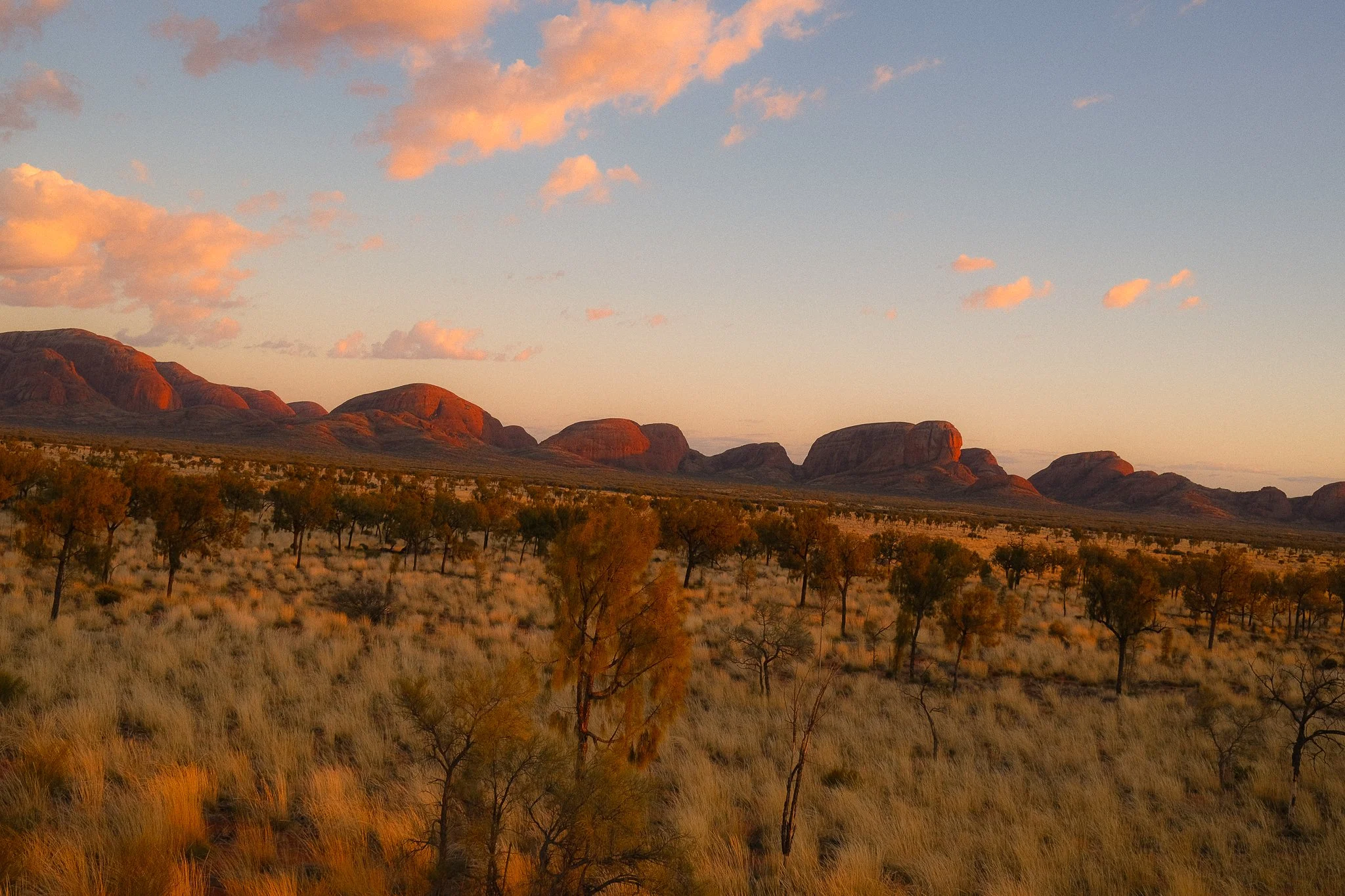
Kata Tjuta, “The Olgas” at Sunrise
3. King’s Canyon
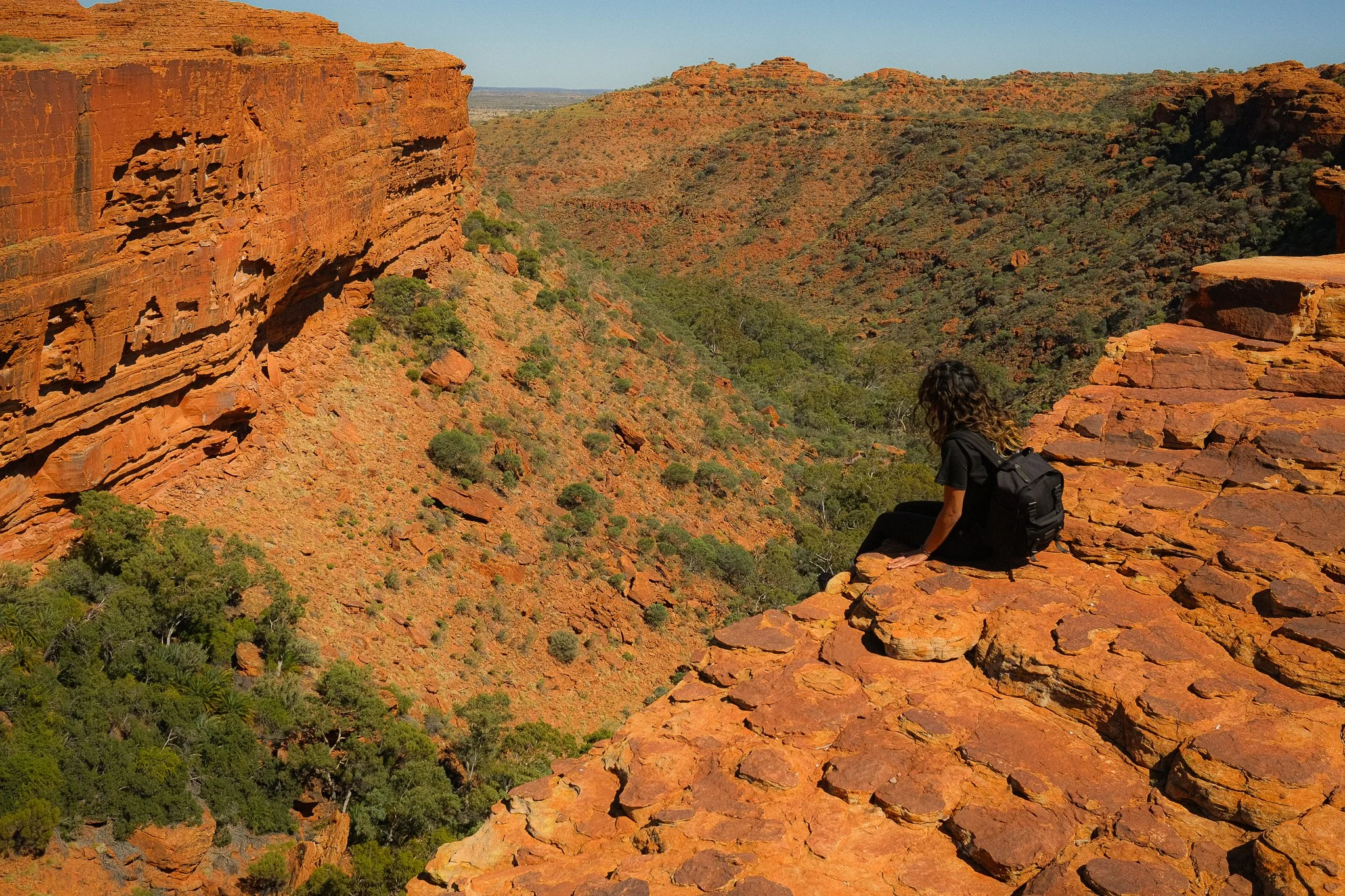
Sitting on the Edge of King’s Canyon
If you keep driving North of Uluru, you’ll eventually make it to King’s Canyon. It offers one of the most dramatic landscapes of the entire Stuart Highway trip: towering red rock walls, deep gorges, and views that hit you right in the chest. The Rim Walk is the star here. The first climb is a steep scramble straight up, but once you’re on the rim, the world opens into a maze of ancient sandstone, weathered domes, and plunging cliffs that glow bright orange in the sun.
Walking along the edge, you get sweeping views down into the canyon- a huge, jagged bowl of red rock. Halfway through, the trail dips into the Garden of Eden, a lush, sheltered pocket of green wedged deep in the canyon and a little oasis filled with ancient cycads and cool shade.
Since it’s quite far off the highway, you get a lot of peace and quiet, making it easy to wander at your own pace, soak in the scale of the canyon, and feel completely immersed in this ancient landscape.
4. The Devil’s Marbles
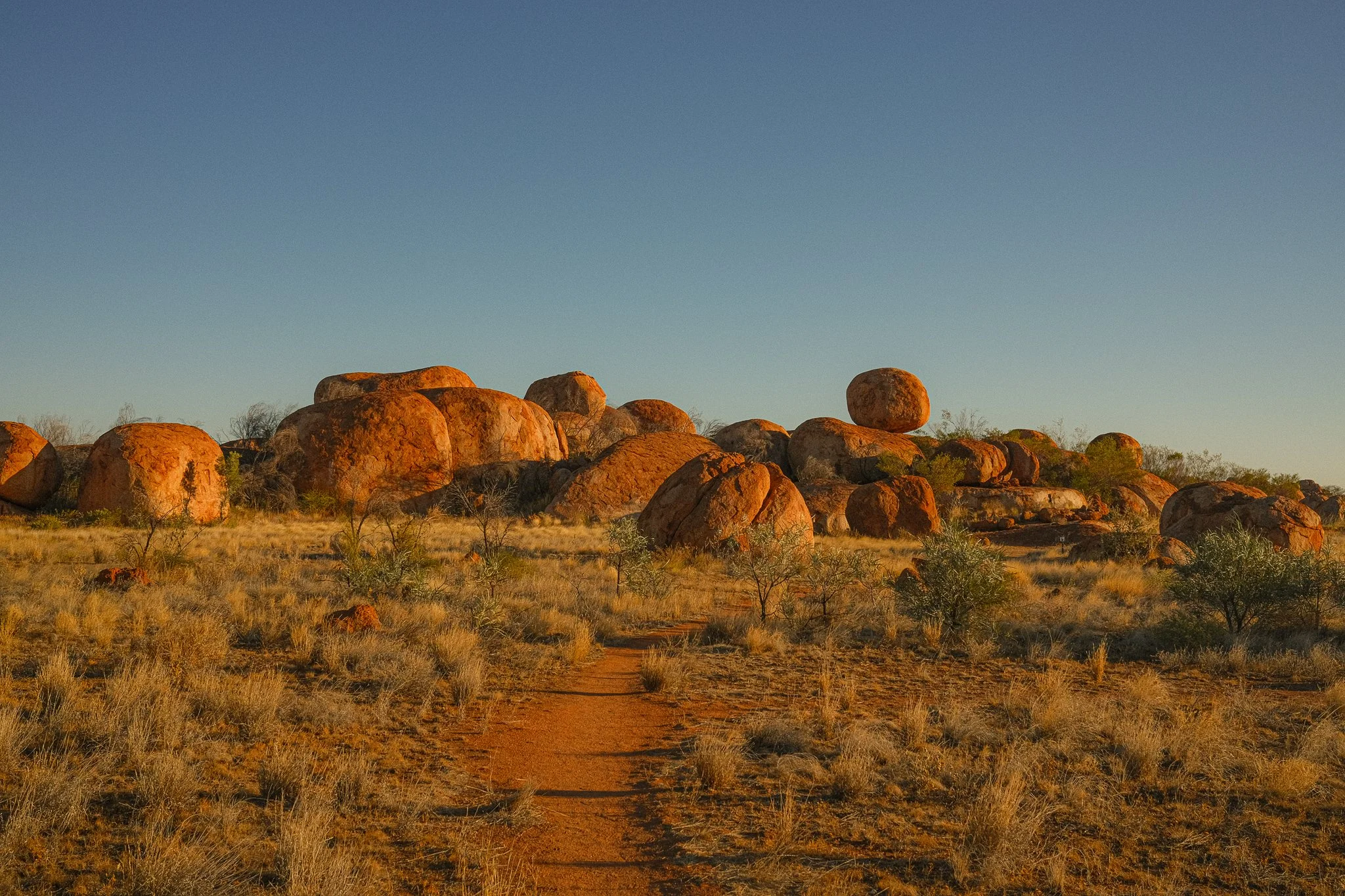
The Devil’s Marbles glowing during golden hour
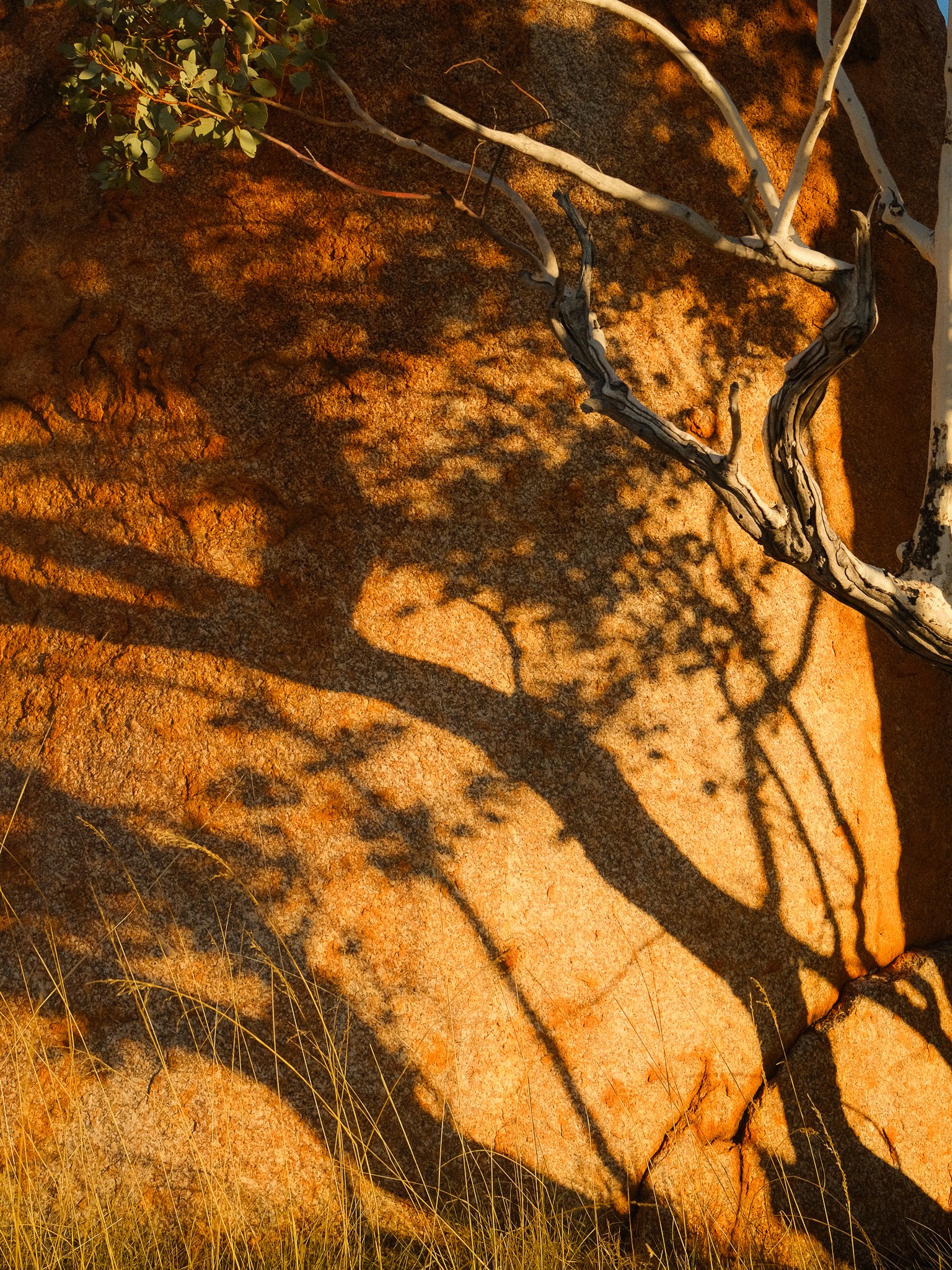
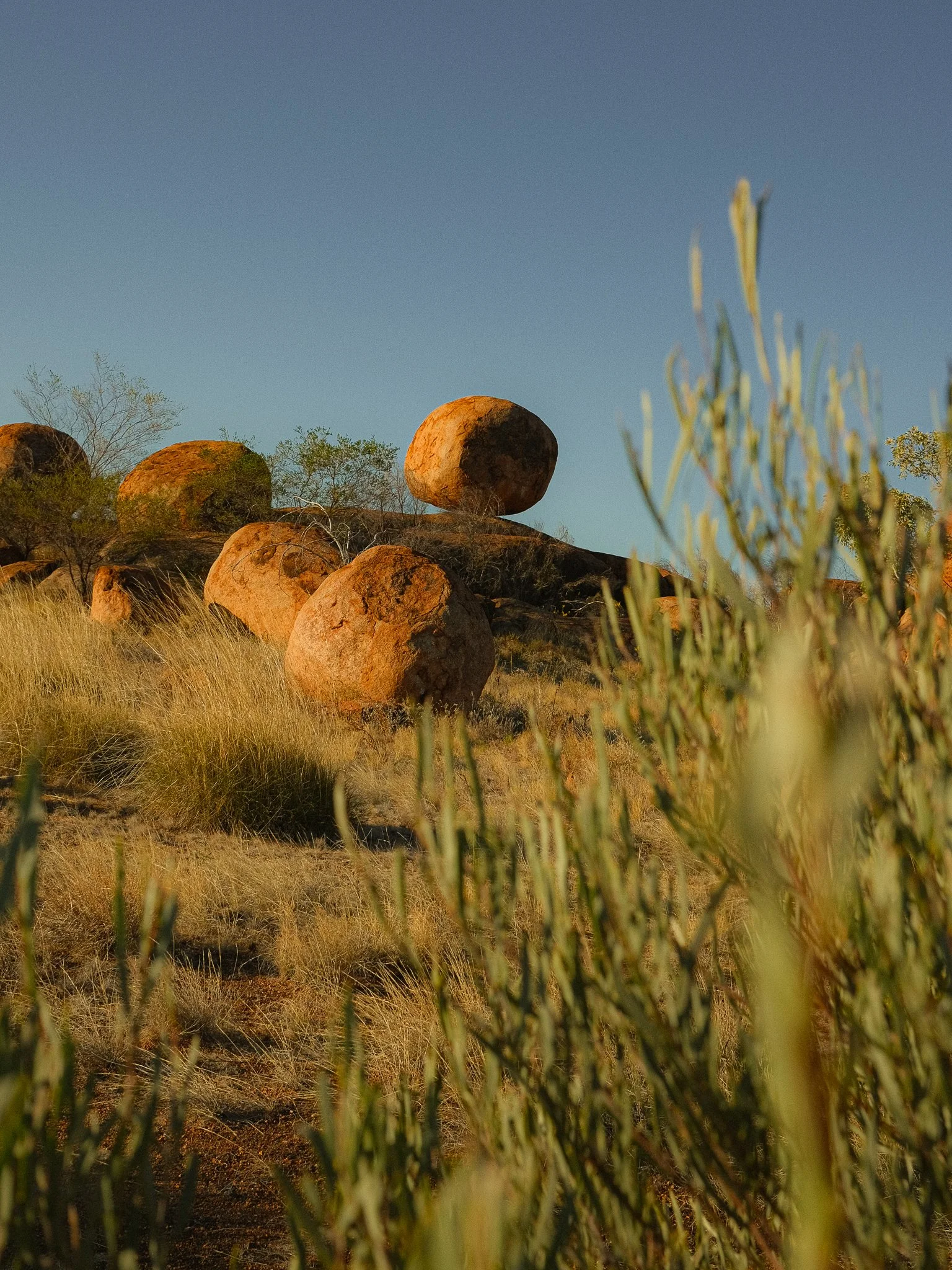
The Devils Marbles, known traditionally as Karlu Karlu, meaning “round boulders,” are one of the most spiritually powerful places along the Stuart Highway. To travelers they look surreal, like nature sculpted a playground of giant stones. But to the Warumungu, Kaytetye, Alyawarre, and Warlpiri peoples, this landscape holds deep cultural significance rooted in the Dreaming.
According to local Dreaming stories, Karlu Karlu is part of the journey of the Emu Man, a powerful ancestral being. As he traveled across the land, he shaped the terrain, and the marbles are said to be the eggs he laid along the way. Other stories speak of ancestral beings whose actions during creation time left these enormous, perfectly rounded stones scattered across the desert. Because these stories are sacred, many details aren’t shared publicly, but it’s understood that every split, crack, and curve holds meaning.
Karlu Karlu is a place people describe as having a powerful energy. There’s a sign at the reserve that talks about how people often feel “pulled in,” as if the landscape holds you for a while. And I’m really not lying, I felt it too. Once I started walking through the horizon of endless boulders glowing fiery orange, I didn’t want to leave…. seriously. Time felt slower here, the quiet deeper, the space almost magnetic. I honestly can’t really put it into words.
I’d highly recommend booking in at the campground to stay overnight, so that you get the chance to wander the walking tracks during sunset and sunrise and move gently through this ancient site. This is a place that stayed with me long after I’d driven off.
5. Daly Waters
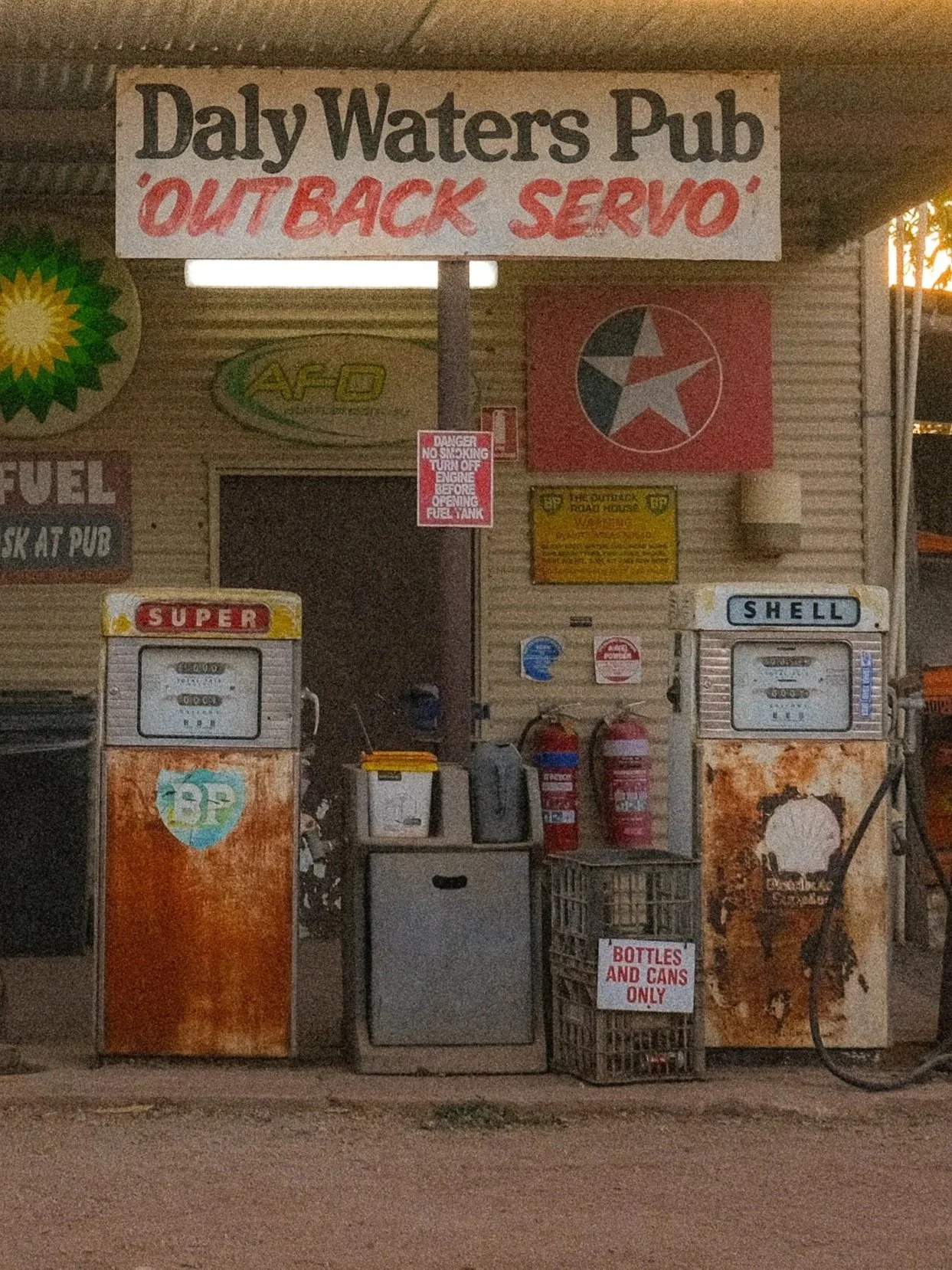
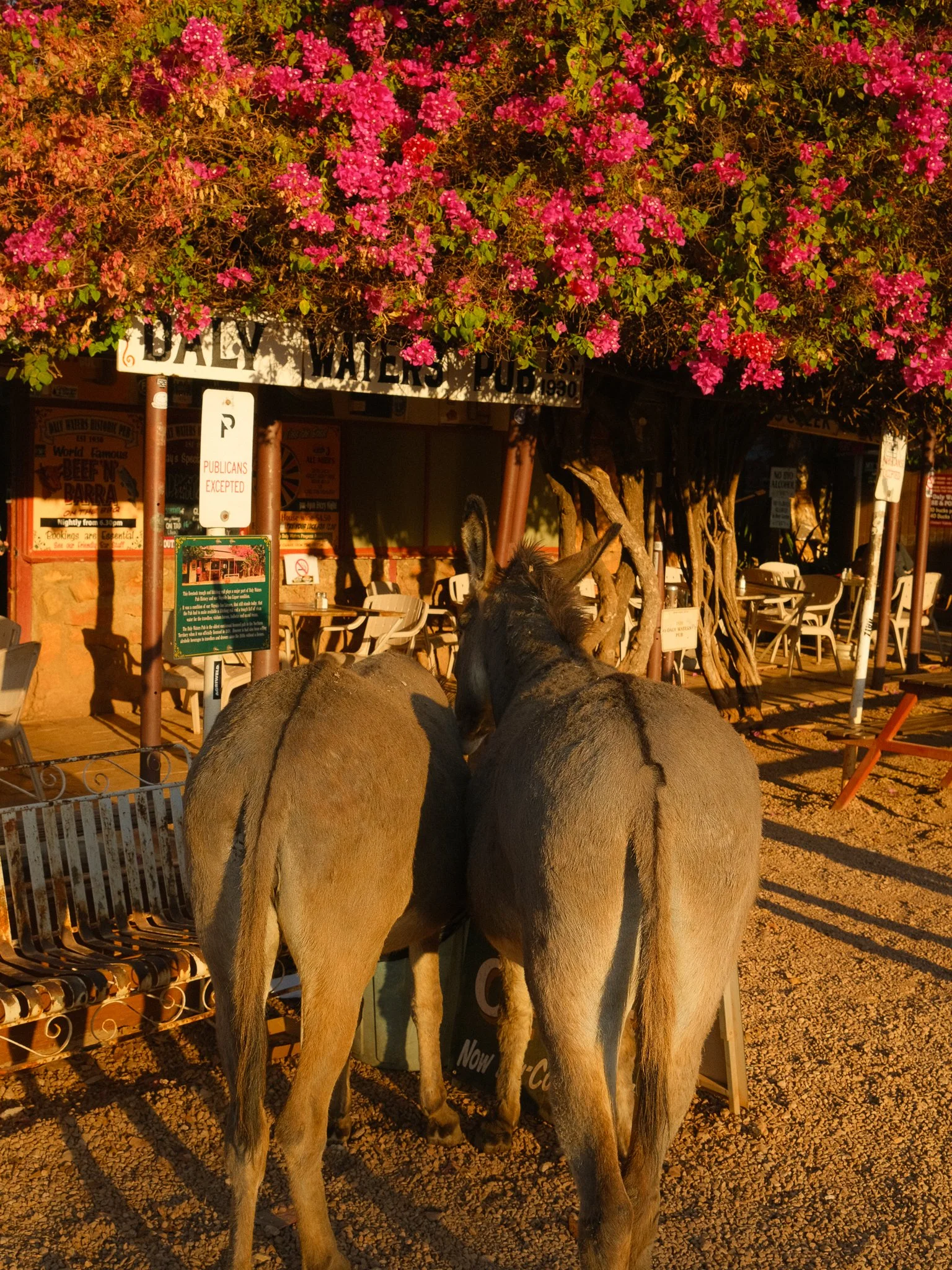
After having dealt with a blown tire on the outback highway earlier that day, (thankfully, a wonderfully kind family pulled over and helped us swap it out), we were positively surprised to stumble into the tiny town of Daly Waters, which felt like stepping straight into a quirky outback movie set. The moment we arrived, the energy shifted: animals of all sorts wandering across the street, old junky servos sagging in the heat, kids feeding bread to chickens, and this general sense of no law nor order. It was strange and weirdly comforting after hours of open road.
We settled in at the Daly Waters Pub for the night, camping for $30 AUD per vehicle. The pub is famous for its walls plastered with traveler memorabilia such as banknotes, bras, ID cards, hats, license plates, work badges, and all sorts of eccentric trinkets left behind by people passing through. Every corner feels like a scrapbook of everyone who’s ever been here. It’s wonderfully chaotic and completely charming in that only-in-the-outback kinda way.
Daly Waters is an iconic stop along the Stuart Highway and it’s an absolute must to grab a very large beer and watch the steady stream of dusty road-trippers rolling in.
6. Bitter Springs
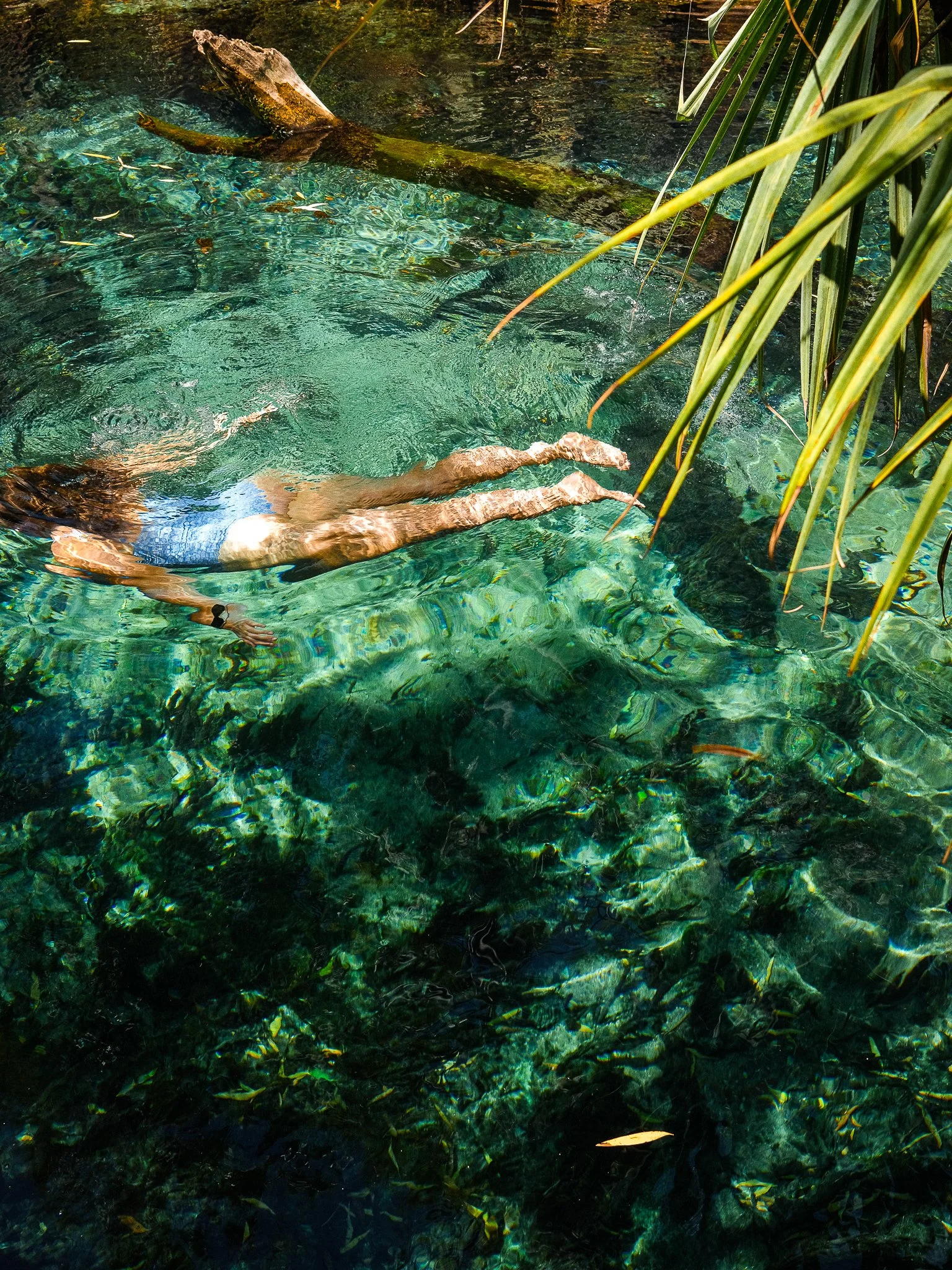
Bitter Springs feels like a sudden exhale after days in the outback… a hidden tropical pocket where everything suddenly transitions from dusty rusty musty orange to brilliant turquoise. It’s like a little pocket of tropical magic in the middle of the desert. Tucked just outside the tiny town of Mataranka, these natural thermal springs wind through tall palms and pandanus, creating a lovely float. You hop in at the beginning and swim or float down the bath-warm crystal clear blue water. It’s really quite magical, even amidst the lowkey underlying anxiety that possibly just maybe there could be a crocodile floating alongside you- just don’t think about that. Yes, you heard me, theoretically there could be crocs in the water. But don’t worry, they’re only “freshies” (fresh water crocs) not “salties” (salt water crocs) so they wouldn’t do that much damage anyway… (just me adopting the traditional Aussie mindset about crocs).
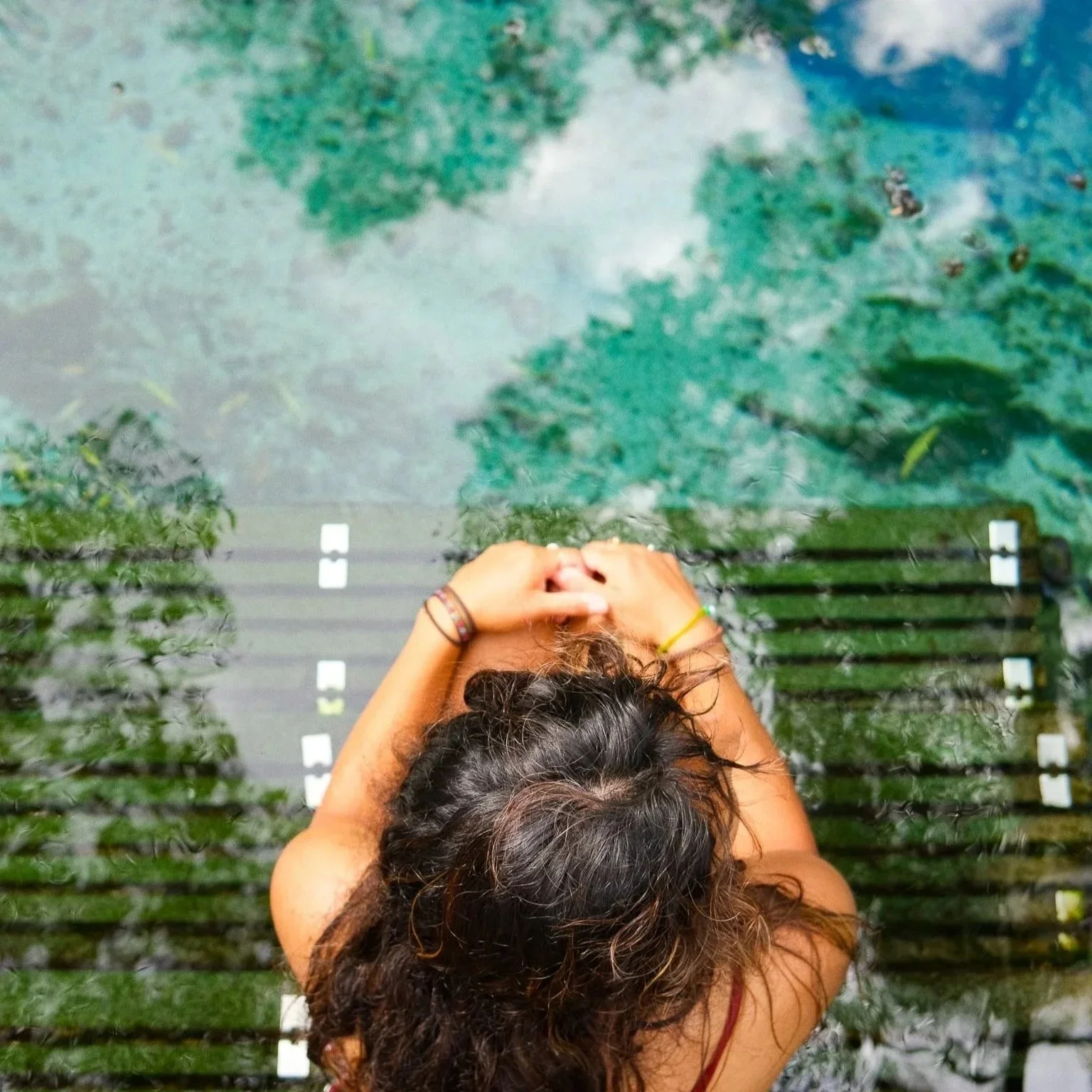
Pro Tip: Another thermal pool in the area is Mataranka Hot Springs. We stayed there the first night we arrived and endured what can only be described as a literal bat storm. Our vans were splatter-sprayed yellow, if you need a visual. Mataranka is… interesting to check out, as long as you can handle the smell and the realization that your relaxing soak comes with unexpected wildlife. My urgent recommendation? Spend most of your time at Bitter Springs. You’re welcome. xoxox
Bitter Springs was yet again another place I wasn’t ready to leave. The stunning clear water felt like dipping into heaven after driving through dusty outback for ages. It was a pleasant reset. Rejuvenating. Please please go there and stay a while.
7. Litchfield National Park
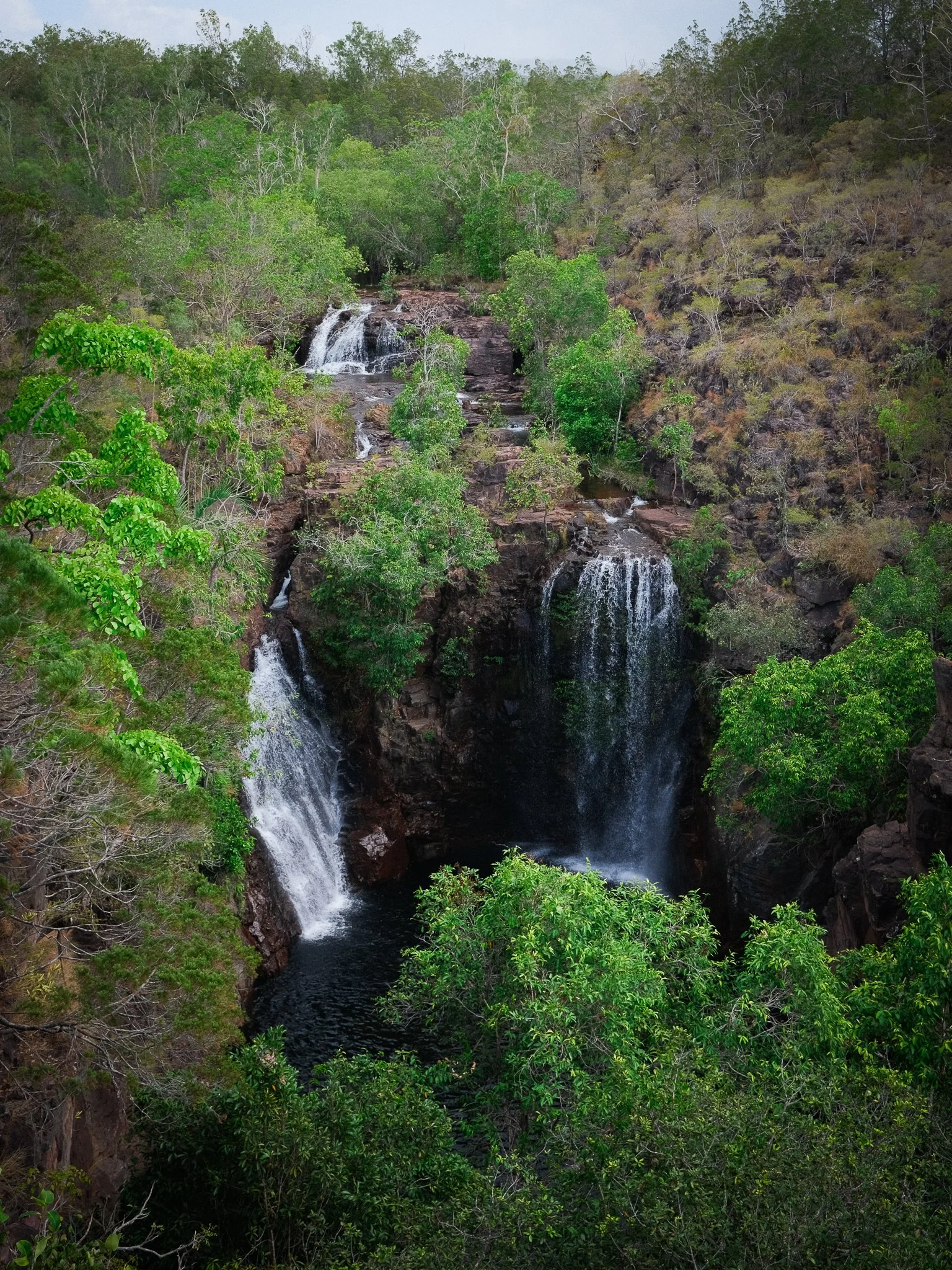
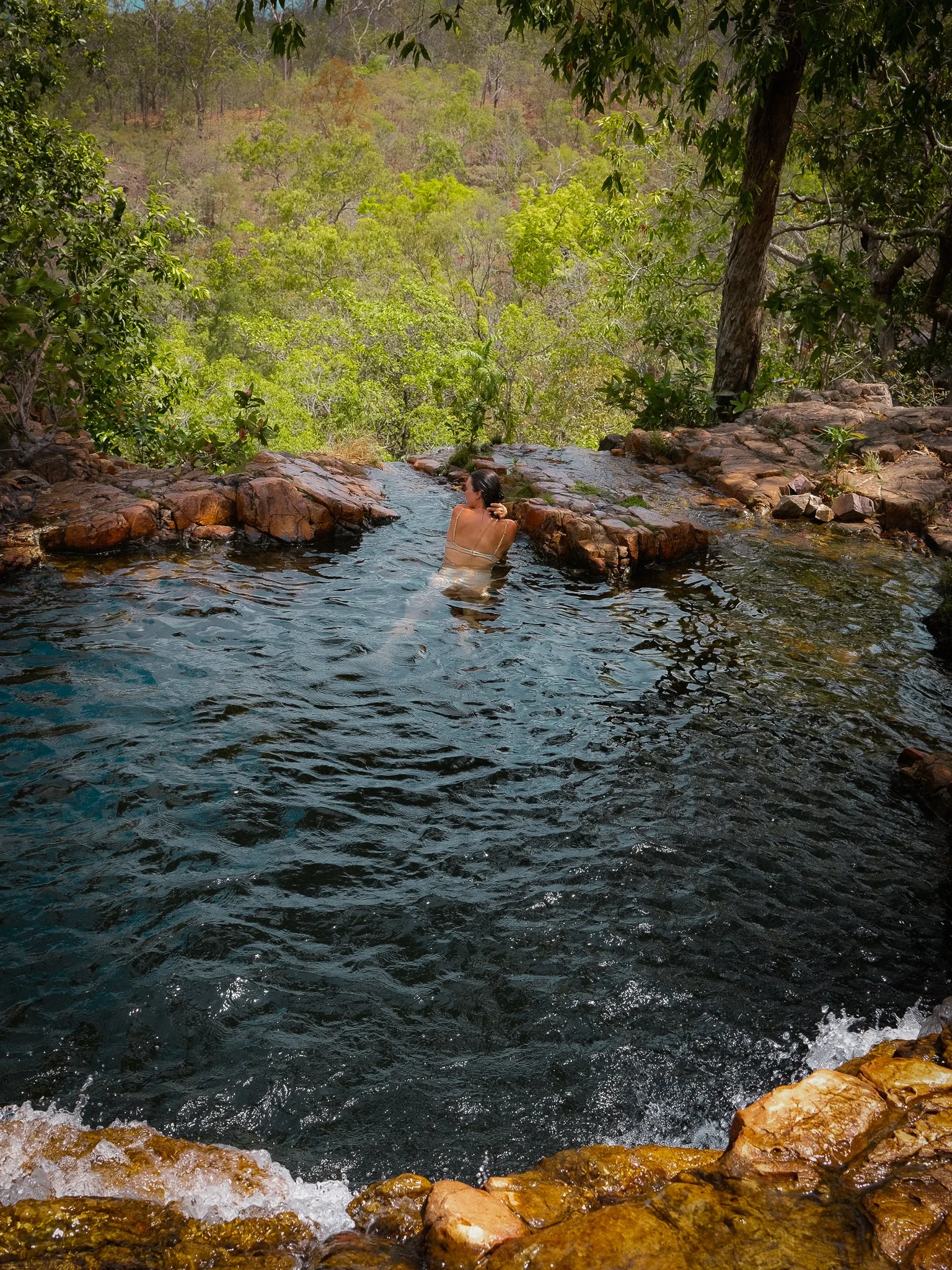
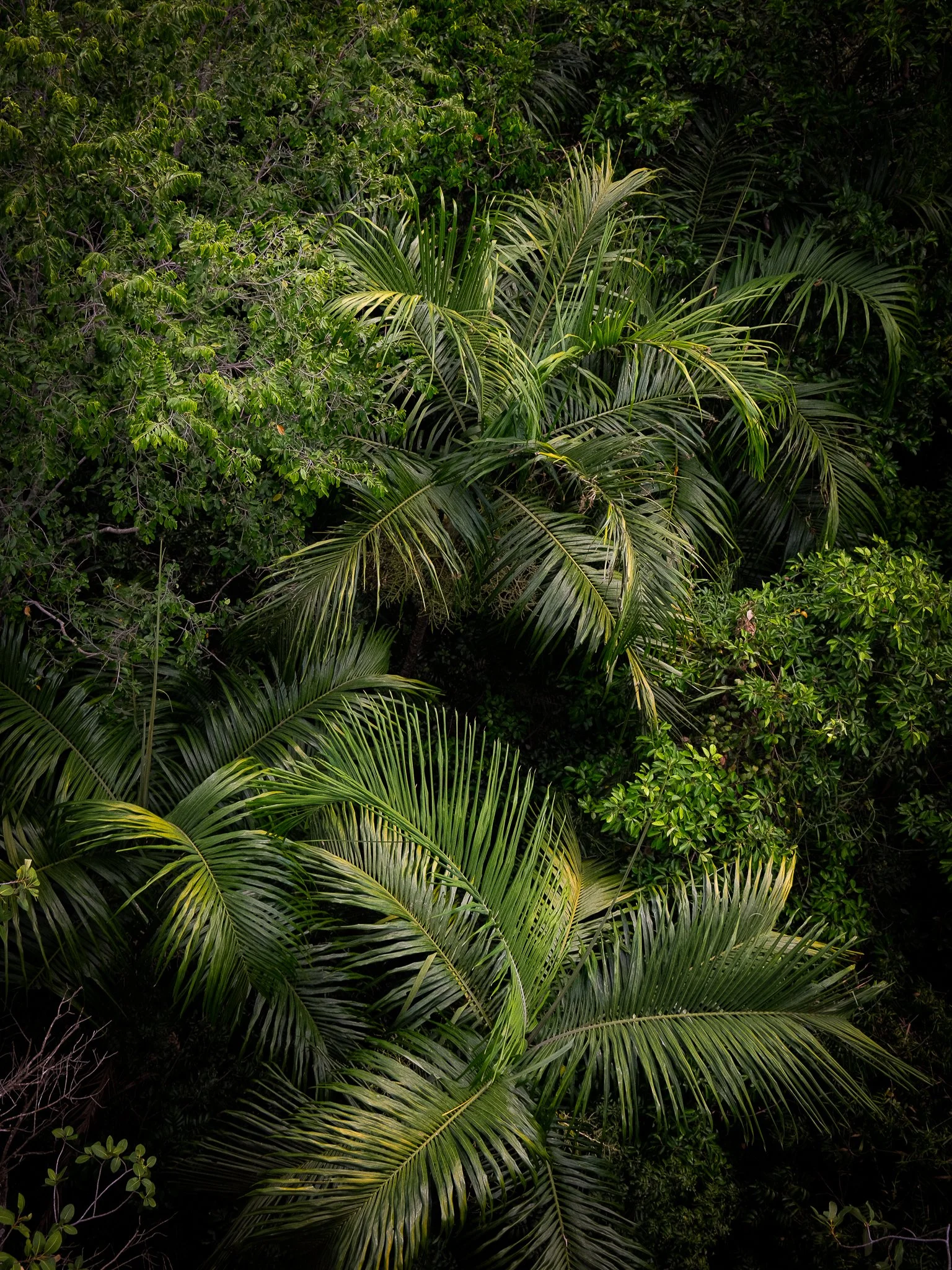
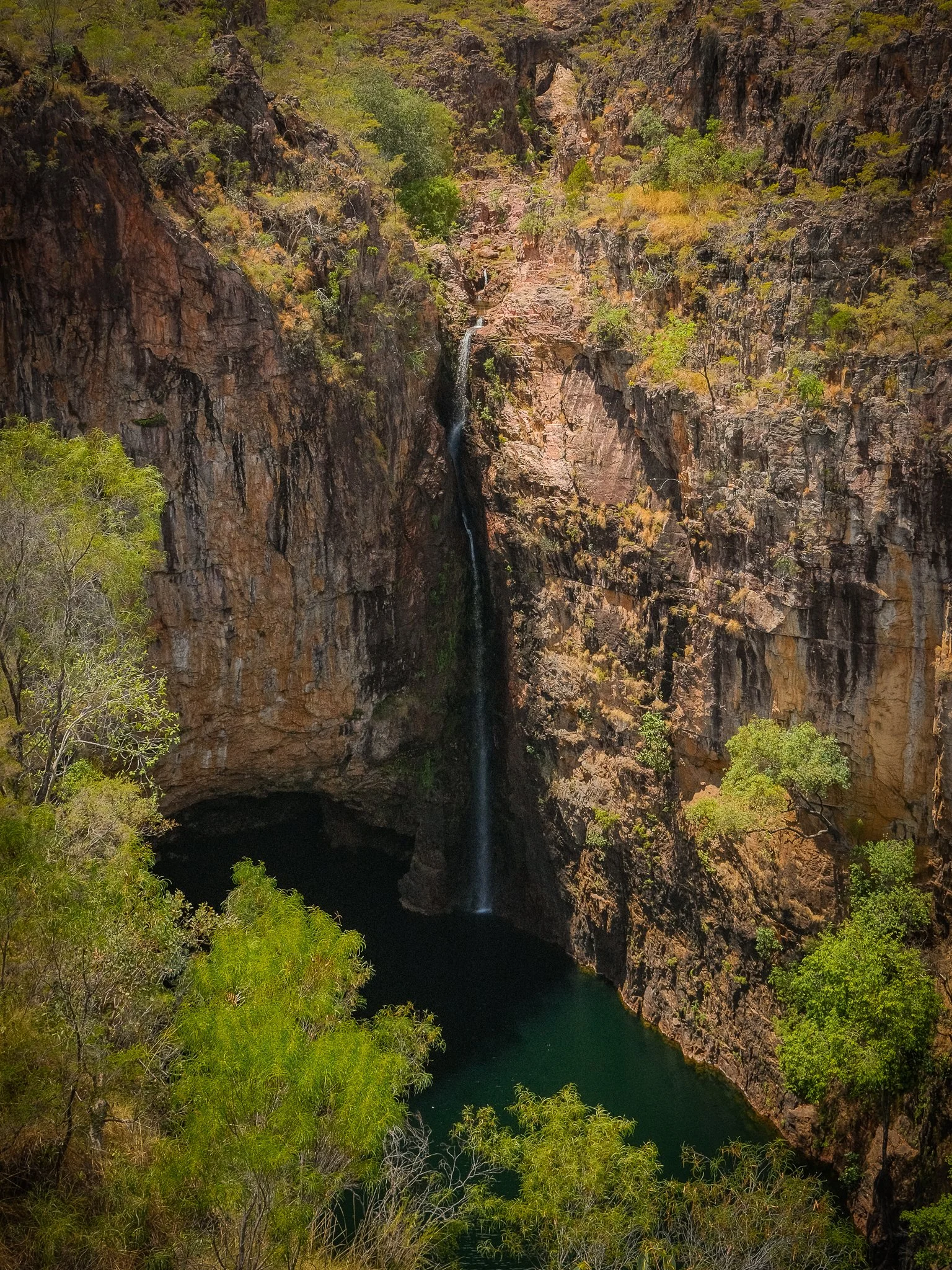
Litchfield National Park is a perfect loop-drive detour off the Stuart Highway, packed with waterfalls, rockholes, and tropical landscapes. In just a few hours, you go from open savannahs to dense monsoon forest, making each stop feel completely different from the last.
The Magnetic Termite Mounds are an early highlight: impressive, towering insect-made sculptures that make you question the secret life of termites. We spent an afternoon relaxing at Buley Rockhole, which is a series of cascading pools perfect for exploring, and there’s even a swamp lizard who lives there who might join you for a swim if you’re lucky.
Florence Falls is another iconic stop. The walk down offers stunning aerial views of the lush monsoon forest below, and the plunge pools at the bottom are perfect for a refreshing dip. Tolmer Falls doesn’t allow swimming, but the lookout is incredible, and we even spotted a croc gliding through the water far below, quickly putting an end to any thoughts of wanting to jump in.
Wangi Falls makes for a scenic overnight stop, letting you swim, wander trails, and enjoy a little peace before the heat and flies reclaim their dominance. But the hidden gem of the park, and our absolute favorite, was Tjaetaba Falls. A short climb keeps most people away, making the pool feel like a private waterfall oasis. The cascading water and quiet surroundings made it feel magical, a perfect moment to pause and soak in the Top End’s beauty.
8. Kakadu National Park
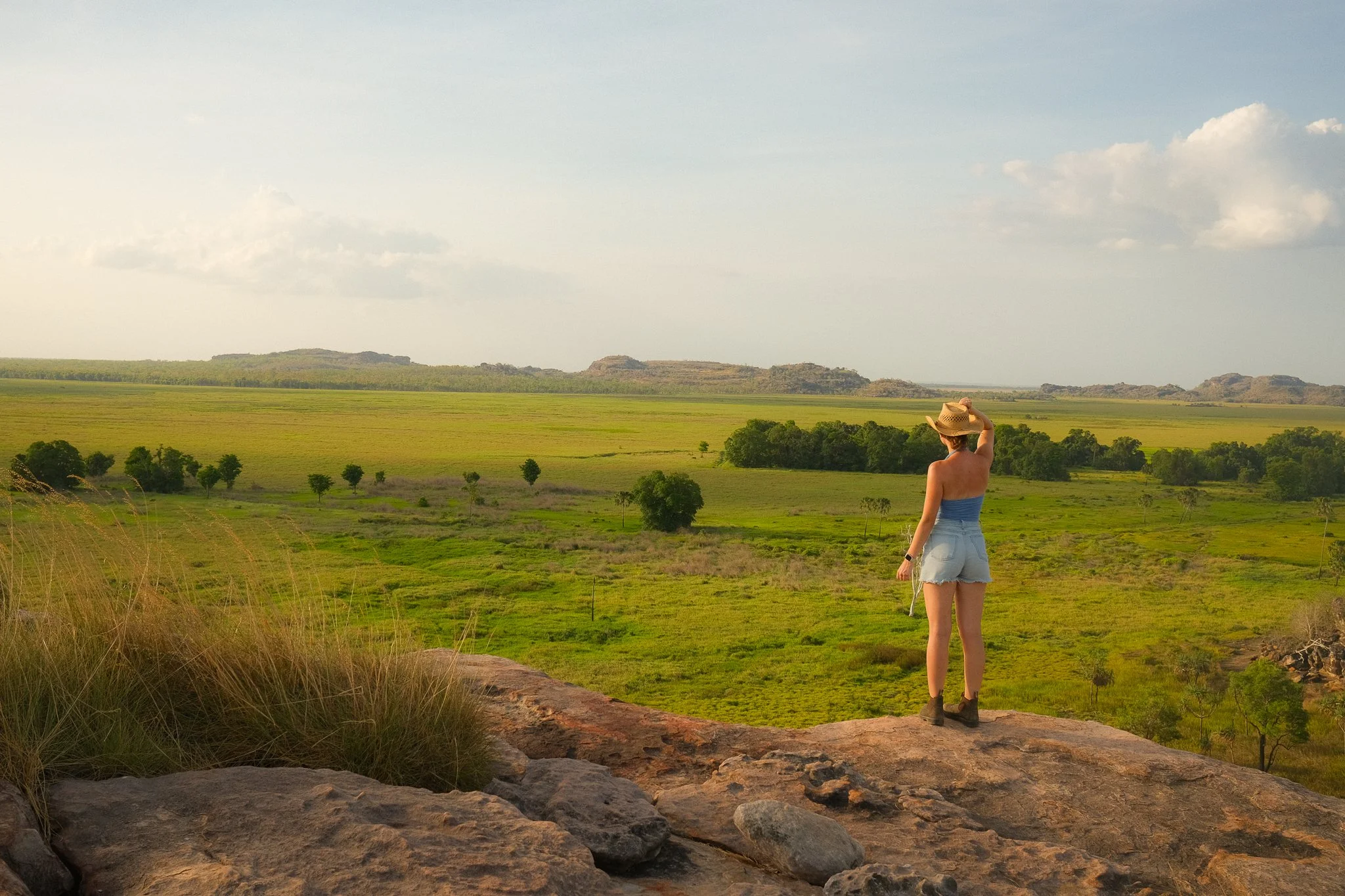
Looking out onto the Arnhem Land floodplains at Ubirr
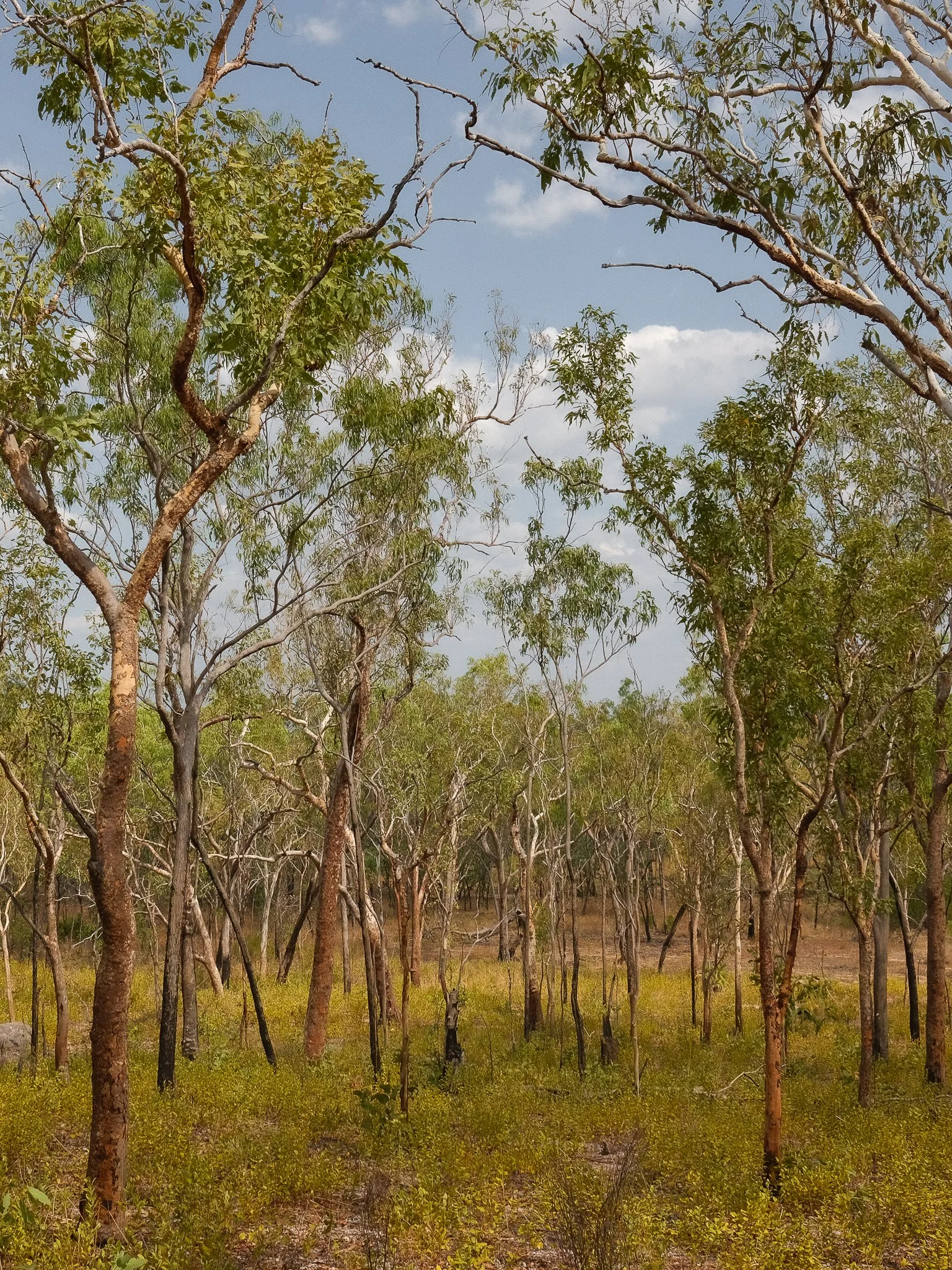
Kakadu National Park is just a couple of hours from Darwin, but it feels like stepping into a completely different world. Lush tropical bushland surrounds you, with towering eucalyptus, bird-filled billabongs, and horizons so wide that your human-sized problems suddenly shrink. A 4WD is necessary for reaching some of the remote waterfalls, so we unfortunately did not make it to a few key spots. Nevertheless, we persisted (and Kakadu still delivered).
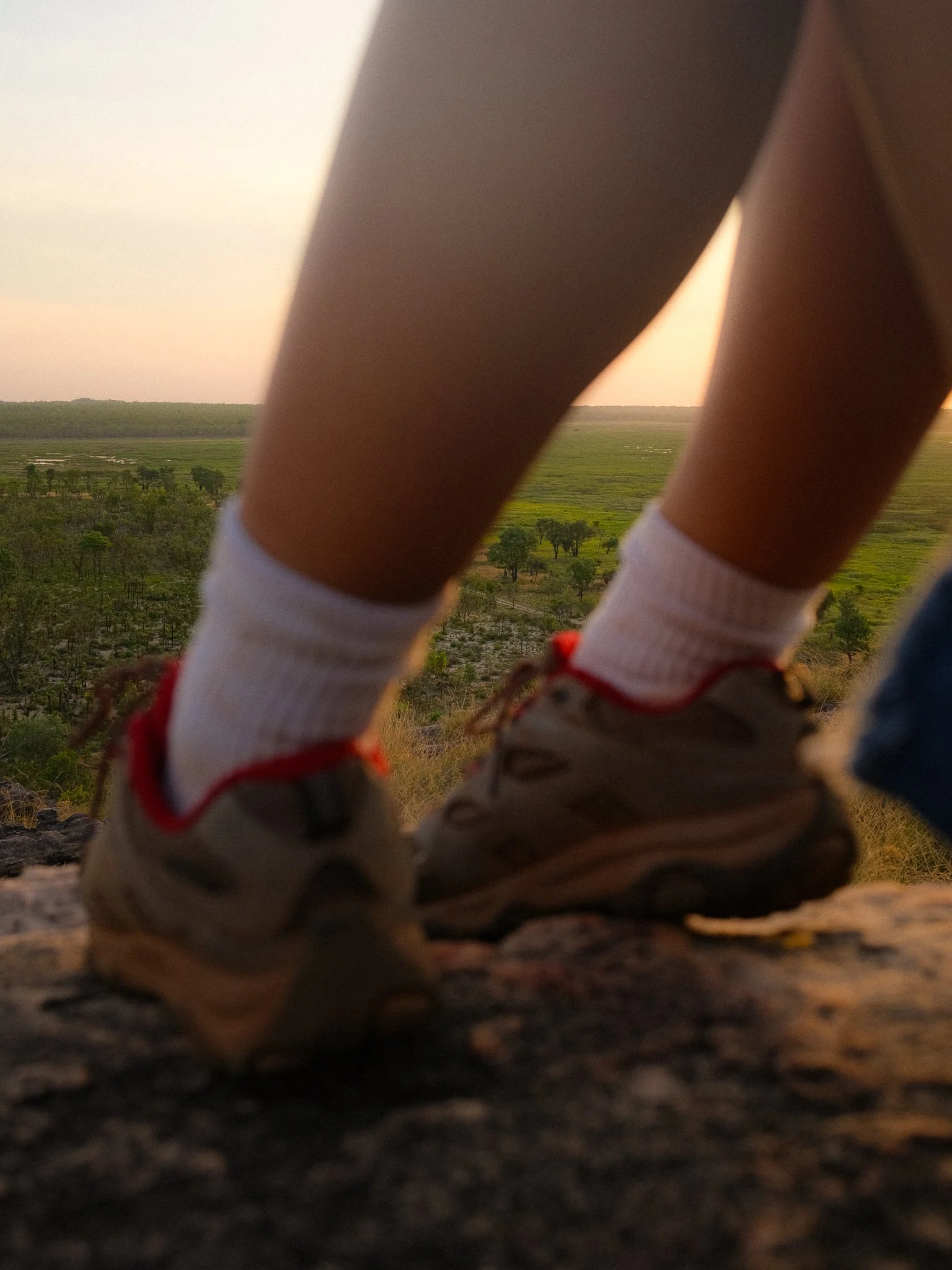
Ubirr Rock Art Site is a place that genuinely took my breath away. The rock shelters are covered in ancient Aboriginal paintings, some thousands of years old, depicting stories of hunting, daily life, creation beings, and lessons passed through generations. There’s something powerful about standing in front of art that has watched over this land for so long. After wandering through the natural art galleries, the short walk up to the lookout is unforgettable. At the top, the landscape opens into vast floodplains stretching endlessly toward Arnhem Land. We reached the lookout near sunset, and just enjoyed the glowing sun descend over the horizon in radiating stillness.
Injalak Arts, located in the border store, showcases stunning Aboriginal artwork, from traditional paintings to contemporary pieces, each telling stories of culture, history, and connection to the land. We also checked out Cahills Crossing, where you can spot several crocs meandering the river and the banks (don’t get too close!).
Burrungkuy (Nourlangie) Rock Shelter was another highlight, a natural gallery of ancient rock art that left us in awe. The Sandstone Walk, winds through rugged rock formations and taking in sweeping views over the surrounding plains. The Nawurlandja Walk and Lookout offers yet another perspective over Kakadu’s dramatic landscapes. Even under the deathly heat, the climb was worth it.
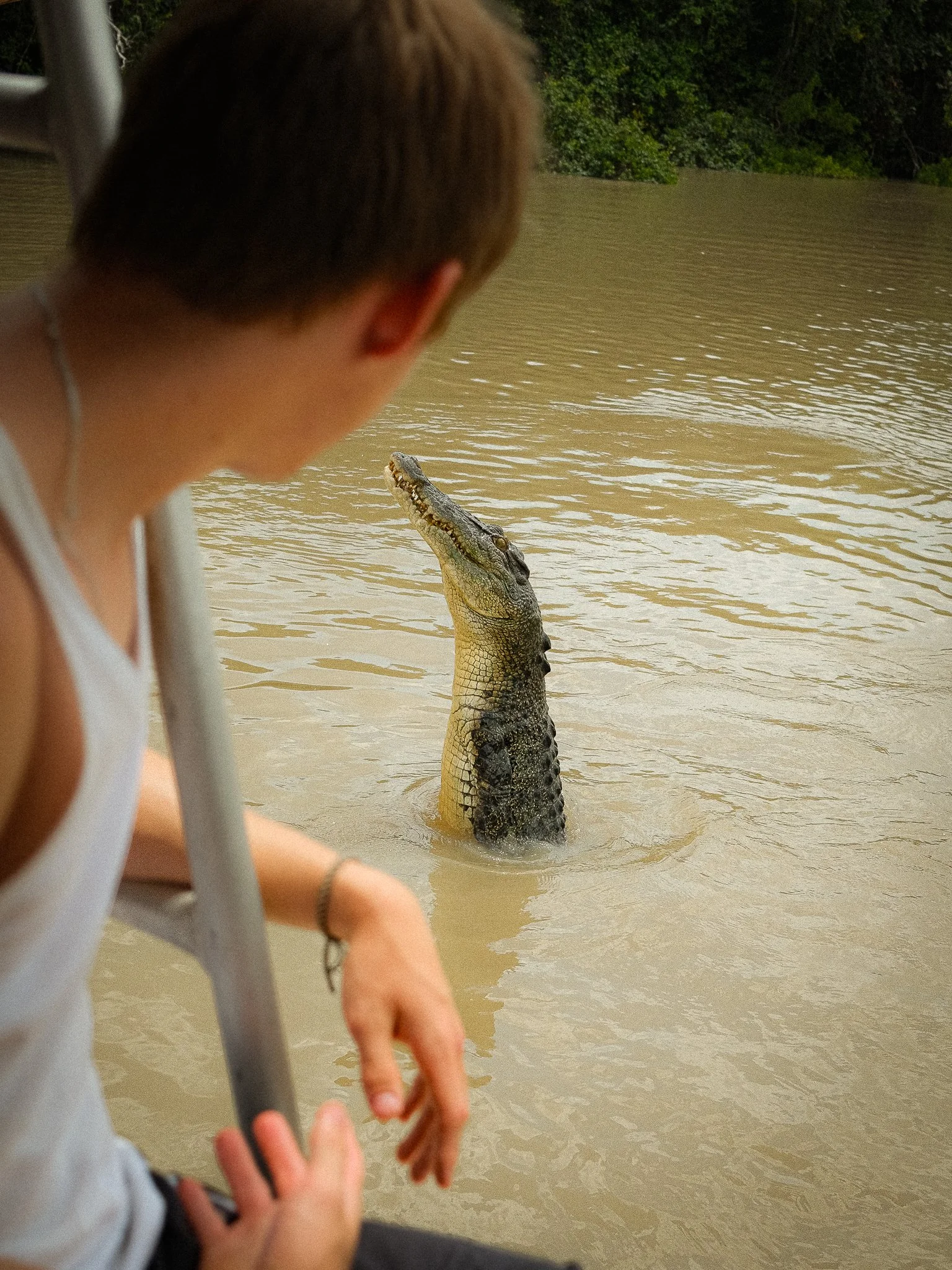
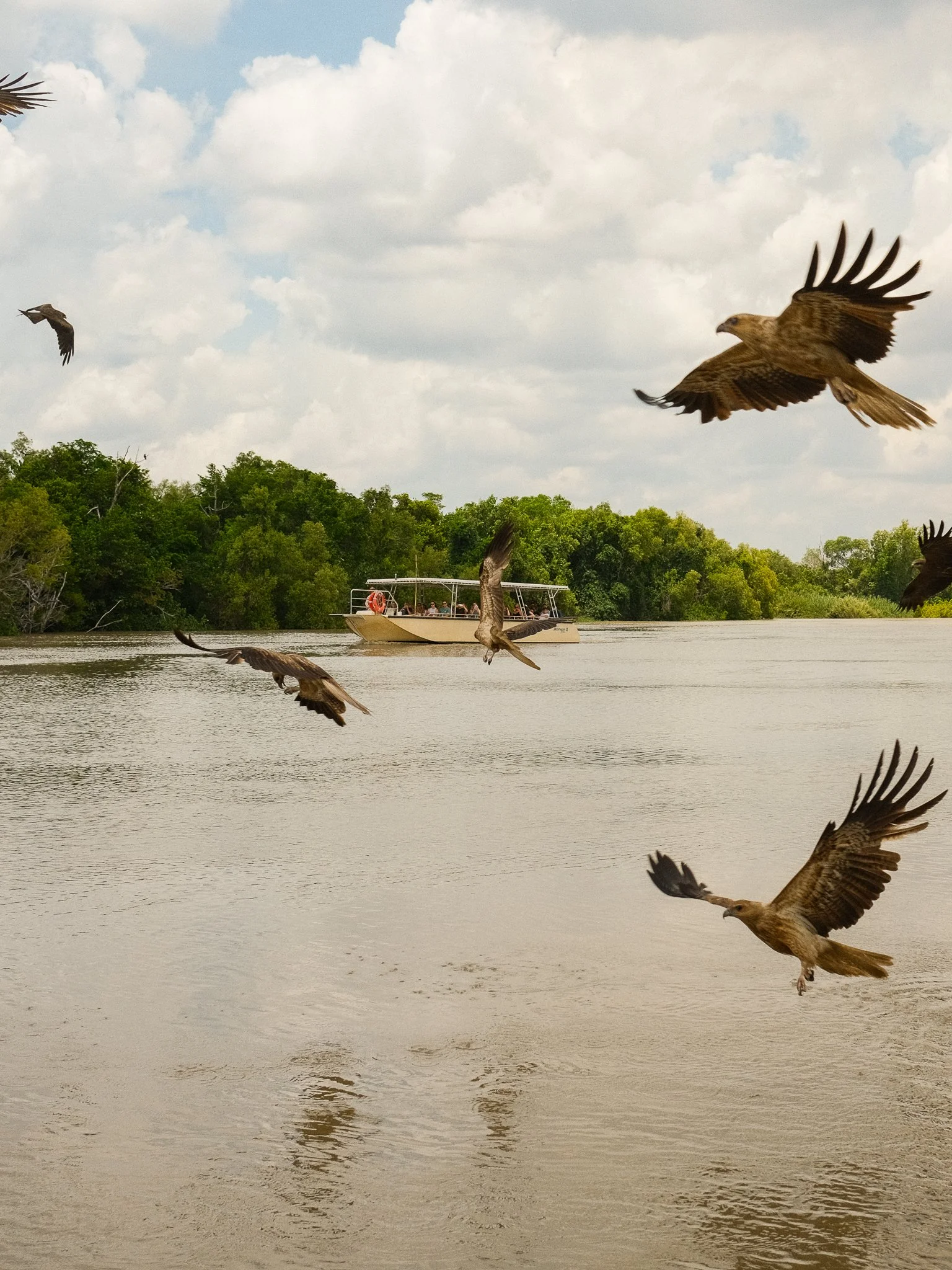
Another must-do Top End experience I’d recommend is a jumping crocodile cruise, where we saw huge saltwater crocs in the wild. Seeing them launch themselves out of the water at lightning speeds to snatch up a chunk of meat was both impressive and intimidating, a clear reminder of how raw and alive this landscape is.
And there you have it folks, the middle of Australia, from South to North- the whole messy, beautiful, disorienting, awe-inducing stretch of it. It’s truly a road trip like no other: the remoteness, the orange-stained dirt that somehow gets into every crevice of your life, the sheer vastness that humbles you without even trying. Sure, a lot of it is just driving through stretches of absolute nothingness, but that emptiness makes every stop along the way hit even harder.
What surprised me most was how grounding it feels to be surrounded by so much space and silence. It forces you to slow down, pay attention, and actually see where you are. One of my favorite parts was watching the landscape shift in real time: starting at the cool southern coastline, drifting into endless flat desert, stumbling across unexpected oasis pools, and eventually rolling into the lush, green tropics of the Top End, a kind of beauty that reveals itself to you piece by piece.
