A Guide to Buying a Campervan in Australia (from someone who just did it)
After I decided I wanted to move to Australia, I took a deeper look at the bottom right corner of a world map and noticed, maybe for the first time in my life, just how big the country is. Okay, I’m not that geographically impaired, but I do think most people underestimate the sheer size of this country. I came to the conclusion that just visiting the popular cities and sites wouldn’t cut it for me. So naturally, I convinced myself that I needed to travel the entire country and complete the ambitious “lap” of Australia. Best way to do that? On the road, in a campervan, all nomadic and outdoorsy and stuff. No rent to pay, no hopping from hostel to hostel lugging your shit everywhere, no figuring out how to get from point A to point B every minute of every day. Instead, you get your own bed, a reliable method of transportation, and the freedom to go whenever and wherever you want in your little home on wheels. And that’s why so many Aussies and backpackers see the country this way. I believe Australia is meant to be explored this way.
So, with reckless optimism and earnest determination, I accepted my fate as a “vanlifer.” Let me spell out how I went about buying my campervan and all the tips and tricks I learned along the way. If the open road is calling and you're dreaming of sunsets, surf, and sleeping in parking lots, you’re in the right place.
1. Get that Australian Driver’s Licence
If you plan to stay in Australia long-term, I’d recommend getting a local driver’s licence. Several states don’t let you drive on an overseas licence forever (eg. New South Wales, Victoria, and the Northern Territory only allow 3-6 months of driving with an international license). I recommend getting one right off the bat so you don't have to deal with it down the line when you’re on the road and have to wait for a physical card to be mailed to you somewhere. It also makes transferring a vehicle’s rego over to you so much easier!
2. Define Your Budget and Stick to It
Before you start falling in love with a fully decked-out campervan setup with all the bells and whistles, take a step back and figure out how much you’re actually willing to spend. Used vans in Australia can range anywhere from $5,000 AUD for a basic setup to $90,000+ for a high-end, professionally converted rig. It really comes down to finding something that fits most of your needs, is mechanically sound, and won’t break your bank.
You want a van that’s reliable, well-maintained, and ready to take on the miles—not one that will leave you stranded in the outback. Don’t let a low price tag lure you into buying something that needs a complete overhaul—unless you're mechanically minded or genuinely excited about tackling a big project (I’m neither). Sometimes, spending a bit more upfront can save you thousands down the line in repairs and stress.
When I bought my van, one of the biggest selling points was that it had recently had most of the major servicing and repairs done. That peace of mind—and not having to head straight to the mechanic—made the price feel totally worth it.
3. Facebook Marketplace is where it’s at
Instead of doomscrolling on Instagram or TikTok, start doomscrolling on Facebook Marketplace looking for vans. I found my van on Marketplace, and honestly, it’s where I had the most luck. I also browsed Gumtree (Australian Craigslist), and some backpacker car boards, but the best leads consistently came from Facebook.
I started browsing used vans months before I even arrived in Australia, just to get a feel for the market. I was looking at trends in prices, common issues, van features, and what models seemed popular among travelers. This 'market research' gave me a solid knowledge base when I was ready to buy, helping me understand the value of different van features and determine if a vehicle was overpriced.
4. Car Brand Matters in Australia
Go with a car brand that’s common in Australia. I made it a point to avoid European brands like Fiat Ducatos or Renault Masters. If you break down in the middle of the outback, the last thing you want is to wait weeks for a rare part to be shipped in. In Australia, popular vans include the Mitsubishi Express, Toyota Hiace, and Ford Transit.
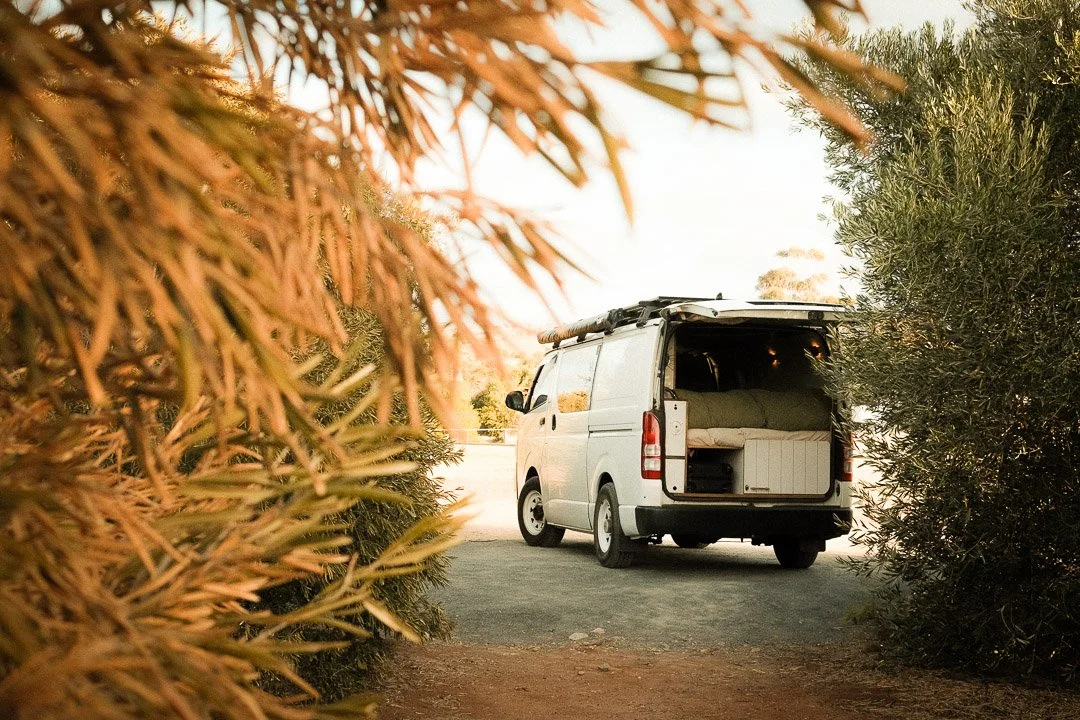
After a month in Australia, I was sold on getting a Toyota Hiace. You see them everywhere. They're reliable, sturdy, and most Aussie mechanics know them inside and out. Plus, I’ve driven Toyotas my whole life, so I’m totally comfortable with them, and the Hiace’s size felt just right for my needs.
5. Make a List of Non-Negotiables
No used car or van is ever going to be perfect, but it’s important to outline your absolute non-negotiables. For me, one big deal-breaker was having automatic transmission. I’ve driven manual cars maybe twice in my life, and there was no way I was going to learn how to shift gears while driving on the left side of the road, driver’s seat on the right side of the car, in a massive van, on unfamiliar highways—hell no.
I also knew I wanted a fully converted van—something ready for living and sleeping, with pull out storage, a kitchen setup, fridge, solar panels, a shower, awning, etc. I did have to compromise on one thing, though: no sink in my van. It was a feature I really wanted, but I ended up finding a DIY solution for that. Bonus features I got with my van include Apple CarPlay, rooftop deck, and cute n’ cozy interior cabin lighting.
6. Consider Kilometers & Care
When buying a used van in Australia, two of the biggest things to look at are the service history and the kilometers on the odometer. Ideally, the van has been serviced every 10,000 km with records to prove it. That wasn’t the case for me—my seller’s mechanic was a family friend who gave them cash deals, so there were zero paper records (a little sketchy, I know). But I was able to visit the mechanic in person, and he kindly wrote out a list of all the services he’d done on the van, so I had a proper paper record to keep.
As for kilometers, don’t be surprised to see vans with 400,000+ kms on them—Australia is massive, and vans get used hard. High mileage isn’t always a dealbreaker if the van’s been well maintained, but it’s something to seriously consider. I aimed for a van with lower kms that I could still resell in a year or two. Mine had 220,000 kms on it, which felt like a solid middle ground—enough life left to go the distance, without being totally beat.
7. “Rego”
In Australia, "rego" (registration) is crucial because it not only makes your vehicle legal to drive but also includes compulsory third-party (CTP) insurance, which covers injuries you might cause to others in an accident. Unlike in the U.S., where registration and insurance are separate, Australian rego is tightly linked to roadworthiness, insurance, and state laws. If a van’s rego expires, you may need to go through inspections and extra paperwork just to get it back on the road. When buying a van, always check that it has current rego (and the rego is ideally for the state you are buying in)— it can save you a lot of time and money.
Also, note that a vehicle’s rego needs to be transferred from seller to buyer within 14 days of purchase, otherwise, you will incur a late fee. I was able to transfer the rego online, and having a NSW license allowed me to do so.
In addition, don’t forget about stamp duty—a one-time fee based on the purchase price or market value of the vehicle (whichever is higher). The rate varies by state but generally falls between 3-4%. This fee is separate from the rego and is usually paid at the time of registration transfer (this fee was an unwelcome surprise for me). It's another expense to factor in when budgeting for your van.
8. The In-Person Van Reality Check
Before buying, always go see the van in person and take it for a test drive. Pay close attention to how it drives: Are there any strange noises? Does it accelerate smoothly? Does it pull to one side? While you’re at it, check all the basics too—this is simple but so easy to forget. Do the windows roll down? Does the air con blow cold? Do the lights and indicators work? How’s the tire tread looking? Try the radio, test the locks, and pop the hood to check the oil level and general condition.
To be completely honest with you, I forgot to do about half of these things when I went to inspect the van I ended up buying—excitement and nerves definitely got the best of me. Luckily, it worked out, but don’t be like me. Make a list ahead of time and actually go through it while you're there. Your future self will thank you.
Bonus tip: If you want to be extra (aka, responsible), consider hiring a mobile mechanic to do a full inspection. They usually cost around $100–$200 and can come to you. Even if the van looks immaculate and the seller seems chill, a mechanic can spot things you might miss—potentially saving you thousands in repairs later.
9. $2 for Peace of Mind
Before purchasing a van, make sure to run a PPSR (Personal Property Securities Register) check. It costs around $2 and tells you if the vehicle has any finance owing on it, has ever been written off, or reported stolen. It’s a quick, cheap, and essential step that can make you feel more secure about your purchase.
10. Seller Vibes Matter
When it comes to buying a van, the last thing you want is to get ripped off. It's super important to meet the seller in person to get the full story on not just the van, but also their experience with it—how long they've had it, why they used it, and why they're selling it. You're about to hand over a significant amount of cash, so you really want to feel like there's some level of trust and genuinity between you and the seller.
And remember, it's not just about the purchase and getting the keys. Transferring rego is a whole process, which takes time and requires good communication with the seller. Building a positive relationship with them is key, so you can reach out with any questions down the road if something comes up with the van.
11. Trust Your Gut
At the end of the day, buying a vehicle in another country is a big deal. You don’t know the laws, you don’t know the people, and you're trying to make a big financial decision with limited info. If something feels off—whether it’s a pushy seller, sketchy paperwork, or a too-good-to-be-true price—listen to your gut. Ask questions, double-check documents, and take your time. Trust that you’ll find the right vehicle for you.
Final Thoughts
So how did I go from casually googling “moving to Australia” to full-blown vanlife? With a bit of blind confidence, zero knowledge about cars, and a whole lot of trial and error. Buying a campervan in Australia isn’t just about buying a vehicle–it’s buying into a lifestyle. One where your backyard changes daily, your schedule is your own, and the road becomes home. It’s exhilarating and daunting and everything in between. If you're thinking about living on the road and traveling Australia full-time - this is your sign.
Stick around to see where my new van takes me next.